
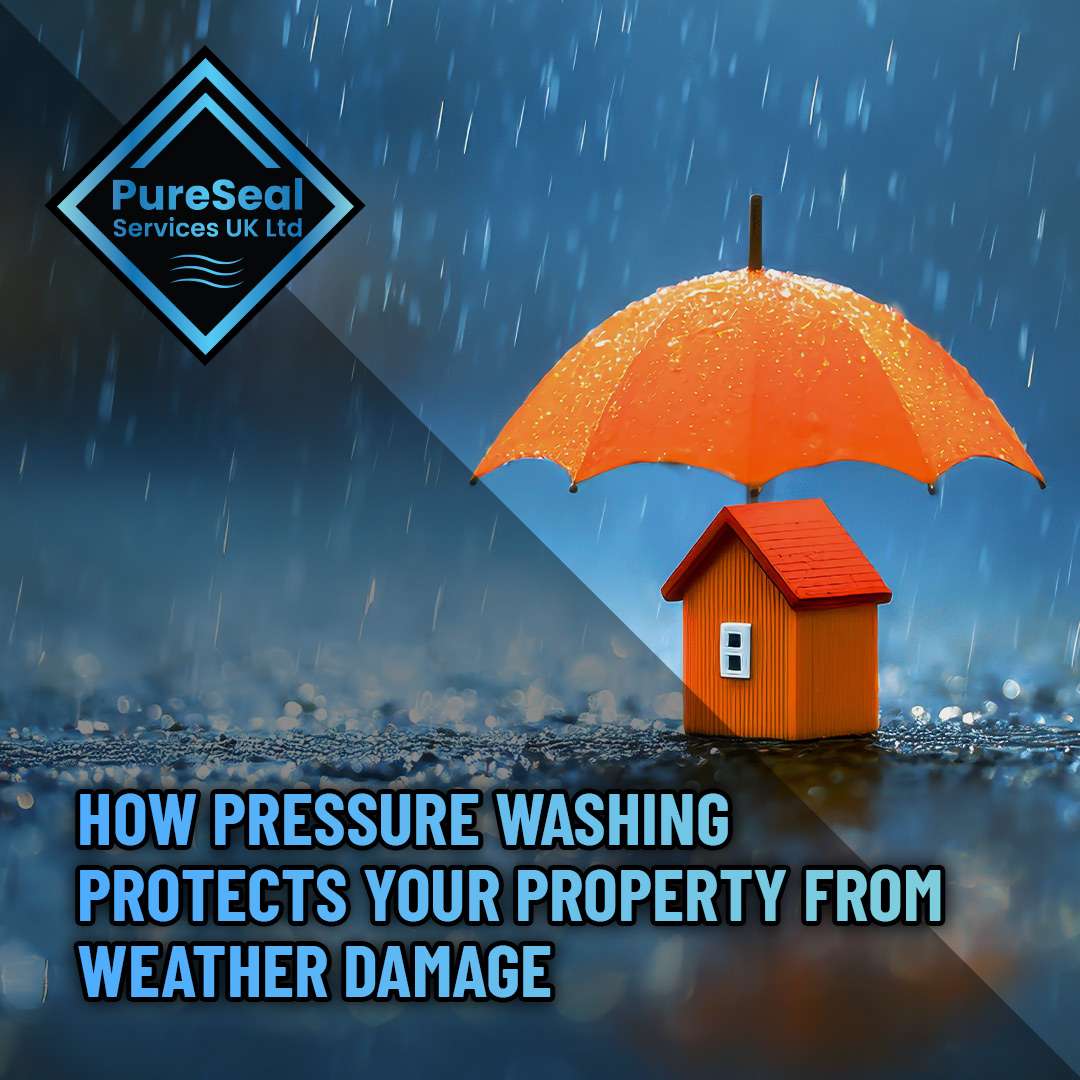
How Pressure Washing Protects Your Property From Weather Damage
Weather is one of the biggest threats to the exterior of any property in the UK. Throughout the year, homes and commercial buildings are exposed to rain, frost, wind, algae growth, moss, pollution, bird droppings and organic debris. While these elements may appear harmless at first, they can gradually cause significant deterioration to driveways, patios, walls, roofs and other external surfaces.
Regular pressure washing is one of the most effective preventative maintenance solutions available. By removing contaminants before they cause long-term damage, property owners can protect their investment, improve kerb appeal and reduce costly repair bills.
At Pure Seal Services, pressure washing forms an important part of a comprehensive exterior cleaning and property maintenance programme designed to help properties withstand the challenging British climate.
Understanding Weather Damage on External Surfaces
Weather damage rarely occurs overnight. Most issues develop gradually as dirt, moisture and biological growth accumulate over time.
The UK’s combination of frequent rainfall and relatively mild temperatures creates ideal conditions for algae, moss and lichen growth. These organisms trap moisture against surfaces, increasing the likelihood of deterioration.
Common Weather-Related Threats
| Weather Factor | Potential Damage |
|---|---|
| Rainfall | Water penetration, staining, surface erosion |
| Frost | Freeze-thaw cracking and expansion damage |
| Moss Growth | Moisture retention and surface degradation |
| Algae | Slippery surfaces and staining |
| Wind | Distribution of dirt, debris and contaminants |
| Pollution | Surface discolouration and chemical damage |
| Bird Droppings | Acidic staining and material deterioration |
Without regular cleaning, these issues can compound, leading to more expensive repairs and restoration work in the future.
How Pressure Washing Removes Harmful Contaminants
Pressure washing uses controlled streams of water to remove built-up dirt, grime, organic growth and pollutants from exterior surfaces.
Unlike basic brushing or rinsing, professional pressure washing reaches deep into textured surfaces and porous materials where contaminants often become embedded.
The process can effectively remove:
- Moss
- Algae
- Lichen
- Mud
- Traffic film
- Airborne pollutants
- Bird droppings
- Leaf staining
- Organic debris
- Surface mould
Removing these contaminants helps prevent moisture retention, which is one of the primary causes of weather-related damage.
Preventing Moisture Damage
Water is often the root cause of many property maintenance problems.
When surfaces become covered with moss, algae or dirt, moisture can remain trapped for extended periods. Instead of drying naturally after rainfall, affected areas stay damp, creating conditions that accelerate deterioration.
Areas Most Vulnerable to Moisture Retention
| Surface | Risk Level | Common Issues |
|---|---|---|
| Patios | High | Algae growth, staining |
| Driveways | High | Surface erosion, weed growth |
| Walls | Medium | Damp patches, discolouration |
| Roofs | Very High | Moss accumulation and tile damage |
| Decking | High | Rot and structural weakening |
Professional pressure washing removes the organic material that holds moisture against these surfaces, allowing them to dry more effectively after wet weather.
Protecting Driveways From Weather Damage
Driveways endure constant exposure to the elements while also supporting vehicle traffic.
Over time, dirt, moss and algae can settle into the surface. When combined with rainfall and freezing temperatures, this contamination can contribute to cracks and premature wear.
Pressure washing helps protect driveways by:
- Removing slippery algae and moss
- Preventing weed establishment
- Eliminating oil and grime build-up
- Improving drainage performance
- Reducing freeze-thaw damage risks
Whether constructed from block paving, concrete, tarmac or natural stone, driveways benefit significantly from routine cleaning.
Signs Your Driveway Needs Pressure Washing
| Warning Sign | Possible Consequence |
|---|---|
| Green surface growth | Slippery conditions |
| Standing water | Drainage problems |
| Black spots | Deep biological contamination |
| Weed growth | Surface movement |
| Surface discolouration | Permanent staining |
Regular maintenance can extend the lifespan of driveway materials and preserve their appearance throughout the year.
Safeguarding Patios and Outdoor Living Areas
Patios often become one of the first areas affected by weather-related contamination.
Shaded sections frequently remain damp, encouraging moss and algae growth. Over time, this can make surfaces slippery and unattractive.
Pressure washing restores patios by removing:
- Green algae
- Black lichen spots
- Surface dirt
- Organic debris
- Food and drink stains
- Atmospheric pollution
A clean patio not only looks better but also reduces the risk of slips and falls during wet weather.
For homeowners who have invested heavily in natural stone paving, regular cleaning helps protect the material from premature deterioration and staining.
Reducing Frost and Freeze-Thaw Damage
One of the most destructive weather-related processes affecting UK properties is the freeze-thaw cycle.
When water enters small cracks or porous materials and subsequently freezes, it expands. This expansion can gradually widen cracks and weaken surfaces.
The process repeats throughout winter, causing increasing levels of damage.
Pressure washing contributes to freeze-thaw protection by:
- Removing moisture-retaining moss.
- Clearing blocked drainage channels.
- Preventing excessive water accumulation.
- Improving surface drying times.
By reducing moisture levels, property owners can minimise the impact of winter weather on external surfaces.
Preserving Brickwork and Masonry
Brick walls and masonry structures are constantly exposed to environmental contaminants.
Over time, dirt, algae and pollution can become embedded within porous surfaces, leading to staining and gradual deterioration.
Professional pressure washing can help preserve masonry by removing:
- Pollution deposits
- Organic growth
- Surface mould
- Atmospheric grime
- Dirt accumulation
Careful pressure settings are essential when cleaning older brickwork, as excessive force may damage mortar joints or delicate surfaces.
Experienced professionals understand how to adjust cleaning methods according to the material being treated.
Protecting Roof Areas From Secondary Damage
Although roof cleaning often requires specialist techniques beyond standard pressure washing, surrounding surfaces benefit greatly from regular maintenance.
When moss accumulates on roofs, it can:
- Block gutters
- Cause water overflow
- Increase moisture retention
- Contribute to tile damage
Organic debris frequently washes down onto walls, patios and driveways during rainfall.
Maintaining clean external surfaces helps prevent these contaminants from becoming established elsewhere on the property.
Property owners looking to protect all external areas can learn more about professional exterior cleaning services through Pure Seal Services.
Improving Drainage Performance
Blocked drainage systems often contribute significantly to weather-related property damage.
Leaves, mud, moss and debris can accumulate around:
- Drain covers
- Gulleys
- Channel drains
- Driveway drainage systems
Poor drainage allows standing water to develop, increasing the risk of:
- Surface erosion
- Frost damage
- Slips and falls
- Structural deterioration
Pressure washing helps clear drainage pathways and supports more efficient water runoff during periods of heavy rainfall.
Impact of Poor Drainage
| Issue | Potential Outcome |
|---|---|
| Standing Water | Surface weakening |
| Overflowing Channels | Property flooding |
| Frozen Water | Crack formation |
| Excess Moisture | Accelerated algae growth |
Maintaining effective drainage is particularly important given the increasingly unpredictable weather patterns experienced across the UK.
Preventing Long-Term Surface Staining
Weather doesn’t simply cause structural deterioration. It can also affect appearance.
Rainwater often carries pollutants, dust and organic matter onto surfaces where they gradually accumulate.
Over time, staining can become difficult to remove without specialist treatment.
Common stains include:
- Rust marks
- Leaf tannin staining
- Black algae spots
- Traffic film deposits
- Pollution staining
Routine pressure washing prevents contaminants from becoming deeply embedded and helps preserve the original appearance of exterior surfaces.
Supporting Property Value
The condition of a property’s exterior plays a major role in its perceived value.
Potential buyers, tenants and visitors often form opinions within seconds of arriving.
A poorly maintained exterior can suggest wider maintenance issues, even if the property itself is structurally sound.
Pressure washing helps create a positive impression by:
- Restoring cleaner surfaces
- Removing visible contamination
- Enhancing kerb appeal
- Demonstrating proactive maintenance
For commercial premises, clean external areas can also strengthen brand image and customer confidence.
Why Professional Pressure Washing Matters
While domestic pressure washers are widely available, professional equipment and expertise deliver superior results.
Incorrect pressure settings can damage surfaces, strip protective coatings and even force water into vulnerable areas.
Professional services provide:
| Professional Advantage | Benefit |
|---|---|
| Commercial-grade equipment | More effective cleaning |
| Surface-specific techniques | Reduced damage risk |
| Experienced operators | Consistent results |
| Specialist treatments | Longer-lasting cleanliness |
| Comprehensive assessment | Identification of underlying issues |
At Pure Seal Services, cleaning methods are tailored to each surface to achieve effective results while protecting the integrity of the property.
The Value of Premium Property Maintenance
Property owners often compare cleaning services purely on price, but quality and expertise are equally important considerations.
Lower-cost providers may use inappropriate techniques, inadequate equipment or insufficient treatment times, potentially leading to poor results or even damage.
Premium pressure washing services typically include:
- Detailed site assessment
- Professional-grade machinery
- Experienced technicians
- Thorough cleaning procedures
- Higher standards of workmanship
For many property owners, investing in a higher-quality service provides better long-term value by reducing the likelihood of future repairs and extending the lifespan of exterior surfaces.
Typical Cost Considerations
| Service Type | Typical Investment Level |
|---|---|
| Basic DIY Cleaning | Low |
| Budget Cleaning Provider | Lower-Mid |
| Professional Premium Service | Higher |
| Surface Restoration After Damage | Significantly Higher |
In many cases, preventative cleaning represents a far more cost-effective option than repairing weather-related damage after it has developed.
Seasonal Pressure Washing Benefits
Different seasons bring different challenges for exterior surfaces.
Spring
- Remove winter grime
- Clear algae growth
- Restore appearance after wet weather
Summer
- Prepare outdoor spaces for use
- Remove pollen and dust accumulation
- Maintain kerb appeal
Autumn
- Clear leaf staining
- Reduce organic build-up
- Improve drainage efficiency
Winter
- Minimise moisture retention
- Reduce freeze-thaw risks
- Protect vulnerable surfaces
A planned maintenance schedule allows property owners to address seasonal threats before they become serious problems.
Surfaces That Benefit Most From Pressure Washing
Pressure washing can be suitable for a wide variety of external surfaces when performed correctly.
| Surface Type | Benefits |
|---|---|
| Block Paving | Weed removal and stain reduction |
| Concrete | Dirt and algae removal |
| Natural Stone | Restoration of appearance |
| Patios | Improved safety and cleanliness |
| Driveways | Protection from contamination |
| Pathways | Reduced slip hazards |
| Walls | Removal of environmental staining |
| Commercial Forecourts | Enhanced presentation |
Each surface requires an appropriate cleaning approach to maximise effectiveness while avoiding unnecessary wear.
How Pressure Washing Helps Prevent Biological Growth
One of the most overlooked causes of weather-related property damage is biological growth. Moss, algae, lichen and mould thrive in the damp conditions commonly found throughout the UK. Once established, these organisms can spread quickly across driveways, patios, walls and other external surfaces.
While they may initially appear to be little more than cosmetic issues, biological growth can create a range of long-term problems.
Moss is particularly problematic because it acts like a sponge, absorbing and retaining large amounts of water. This continual moisture exposure increases the risk of surface deterioration and can accelerate the effects of freeze-thaw cycles during colder months.
Lichen can be equally damaging. Its root-like structures attach firmly to porous materials such as natural stone, brickwork and concrete. Over time, this can contribute to surface erosion and stubborn staining.
Regular pressure washing helps prevent these issues by removing biological growth before it becomes deeply established.
Common Biological Growth and Associated Risks
| Growth Type | Potential Risk |
|---|---|
| Moss | Moisture retention and surface damage |
| Algae | Slippery surfaces and staining |
| Lichen | Surface erosion and permanent marks |
| Mould | Discolouration and damp conditions |
| Mildew | Unsightly appearance and staining |
Routine cleaning is particularly important for north-facing areas, shaded patios and surfaces located beneath trees where sunlight is limited and moisture levels remain higher for longer periods.
Protecting Commercial Properties From Weather Damage
Weather-related deterioration is not limited to residential properties. Commercial buildings, retail premises, offices and industrial facilities all face similar challenges.
A neglected exterior can affect more than just the condition of the building. It can influence customer perceptions, employee satisfaction and overall business reputation.
Pressure washing helps commercial property owners maintain:
- Professional appearance
- Safe pedestrian access
- Clean entranceways
- Well-presented parking areas
- Effective drainage systems
Regular maintenance can also reduce the likelihood of expensive remedial work caused by years of accumulated contamination.
Areas Commonly Cleaned on Commercial Premises
| Area | Benefit of Pressure Washing |
|---|---|
| Car Parks | Improved appearance and safety |
| Walkways | Reduced slip hazards |
| Building Exteriors | Removal of pollution staining |
| Loading Areas | Improved cleanliness |
| Entranceways | Enhanced first impressions |
Businesses operating in customer-facing industries often find that a clean exterior contributes positively to their overall brand image.
The Role of Pressure Washing Before Surface Treatments
Pressure washing is often an essential preparation stage before protective treatments are applied.
Sealants and protective coatings perform most effectively when applied to clean, contaminant-free surfaces. Dirt, moss and algae can prevent proper adhesion, reducing the effectiveness and lifespan of the treatment.
By thoroughly cleaning surfaces beforehand, property owners can maximise the benefits of:
- Block paving sealing
- Natural stone sealing
- Surface restoration treatments
- Protective coatings
This creates an additional layer of defence against weather-related deterioration while helping surfaces remain cleaner for longer.
At Pure Seal Services, professional pressure washing is frequently incorporated into broader exterior maintenance programmes designed to protect properties from the ongoing effects of the British climate. A proactive approach to cleaning and maintenance helps ensure that driveways, patios, pathways and other external surfaces remain in excellent condition despite year-round exposure to rain, frost, pollution and organic growth.