

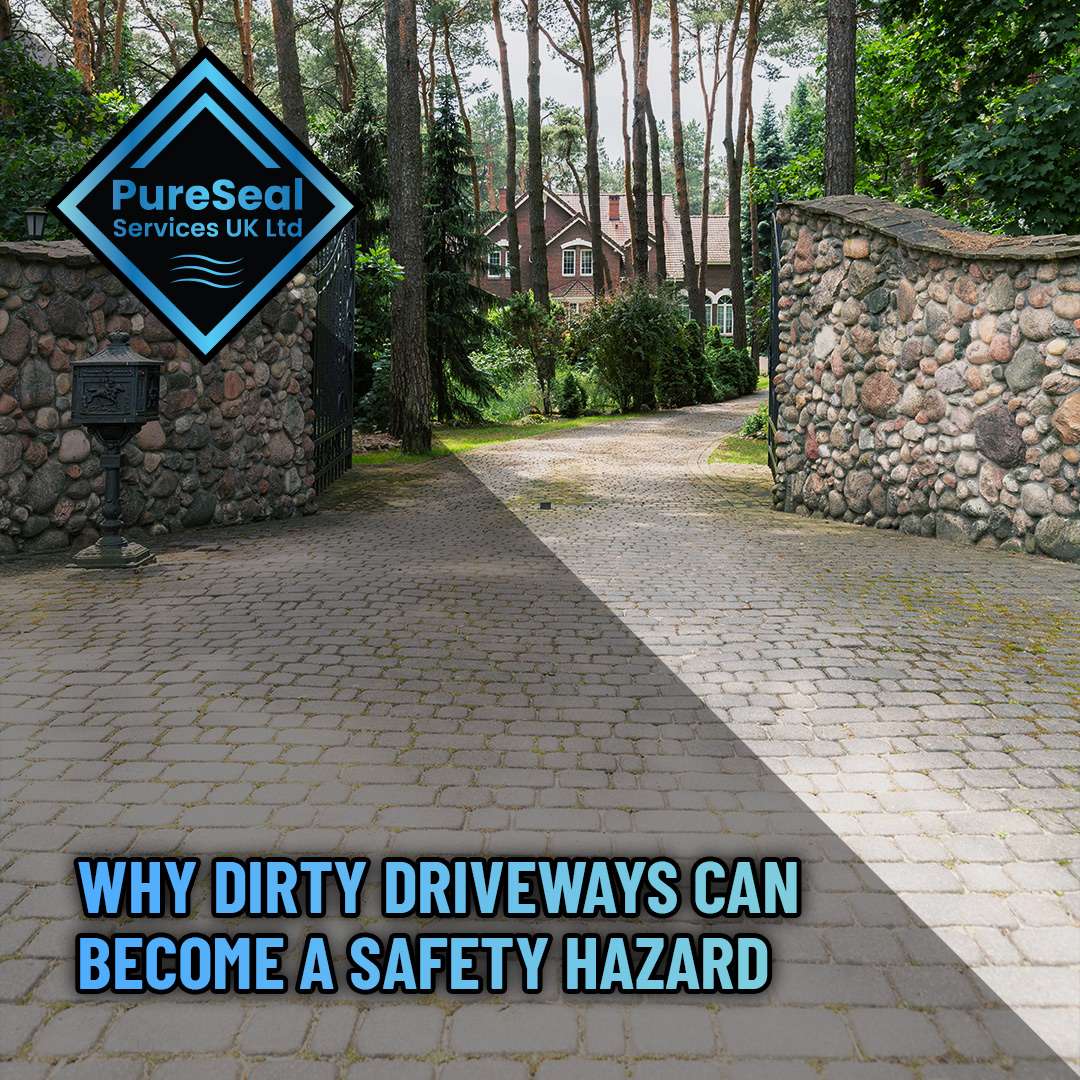
Why Dirty Driveways Can Become a Safety Hazard
A driveway is often one of the largest and most heavily used surfaces on any property. It provides access for vehicles, acts as a pathway for pedestrians and contributes significantly to the overall appearance of a home or commercial premises. However, many property owners underestimate the risks associated with a dirty driveway.
What may initially seem like a purely cosmetic issue can quickly develop into a genuine safety concern. Algae, moss, dirt, oil spills, weeds and other contaminants can create hazardous conditions that increase the risk of slips, trips, falls and even vehicle-related accidents.
Regular driveway cleaning is not just about maintaining kerb appeal. It plays a crucial role in protecting visitors, occupants and customers from avoidable accidents while helping preserve the condition and longevity of the surface itself.
At Pure Seal Services, professional driveway cleaning helps property owners restore safer surfaces and reduce the risks associated with accumulated contamination.
Why Driveways Become Dirty
Driveways are constantly exposed to the elements. Throughout the year they collect dirt, debris and organic growth from a variety of sources.
Common causes of driveway contamination include:
- Rainfall
- Mud from vehicles
- Falling leaves
- Bird droppings
- Airborne pollution
- Moss growth
- Algae growth
- Oil leaks
- Tyre marks
- Weed development
The UK’s damp climate provides ideal conditions for biological growth, particularly during autumn and winter. Without routine maintenance, contaminants can build up quickly and create hazardous conditions.
Common Driveway Contaminants
| Contaminant | Source | Potential Hazard |
|---|---|---|
| Moss | Damp conditions | Slippery surface |
| Algae | Moisture and shade | Slip risk |
| Oil | Vehicle leaks | Reduced traction |
| Mud | Vehicle traffic | Uneven footing |
| Weeds | Surface joints | Trip hazards |
| Leaves | Trees and shrubs | Hidden dangers |
| Lichen | Organic growth | Surface deterioration |
| Standing Water | Poor drainage | Slips and falls |
Even small amounts of contamination can become dangerous when combined with wet weather.
Slips and Falls: The Most Common Risk
One of the biggest dangers posed by dirty driveways is the increased likelihood of slips and falls.
Many contaminants become extremely slippery when wet, particularly algae and moss. These growths often appear as green, black or dark patches across the surface and can significantly reduce grip underfoot.
The danger becomes even greater during rainy weather when surfaces remain damp for extended periods.
How Slippery Surfaces Develop
- Organic growth begins forming.
- Moisture becomes trapped.
- Surface traction reduces.
- Rainfall increases slipperiness.
- Pedestrian accident risk rises.
Homeowners frequently become accustomed to the condition of their driveway and may not notice the gradual increase in hazard levels. Visitors, delivery drivers and tradespeople are often the individuals most vulnerable to accidents.
Protecting Children and Elderly Residents
Certain groups face greater risks when using contaminated driveways.
Children often run across driveways while playing, making them particularly vulnerable to slipping on algae-covered surfaces.
Older adults may experience reduced balance, slower reaction times or mobility issues, increasing the likelihood of injury following a fall.
Higher-Risk Groups
| User Group | Increased Risk |
|---|---|
| Children | Running and playing |
| Elderly Residents | Reduced stability |
| Visitors | Unfamiliar with hazards |
| Delivery Drivers | Carrying parcels |
| Tradespeople | Transporting equipment |
| Customers | Walking across commercial premises |
Even a minor slip can result in fractures, sprains or more serious injuries, particularly for older individuals.
The Hidden Danger of Algae Growth
Algae is one of the most common causes of slippery driveways throughout the UK.
It thrives in damp, shaded areas where moisture remains for extended periods. North-facing driveways and areas beneath trees are especially susceptible.
Many property owners overlook algae because it develops gradually. The green surface growth may appear harmless but can become extremely slippery, especially after rainfall.
Signs of Algae Contamination
- Green surface staining
- Dark patches
- Slimy texture
- Persistent dampness
- Discolouration around edges
Professional pressure washing removes algae effectively and restores traction to the surface.
Moss Creates More Than Just a Visual Problem
Moss growth is another common issue affecting driveways.
Unlike algae, moss develops in thicker clumps and can hold significant amounts of water. This creates persistent damp conditions that increase slip hazards and contribute to surface deterioration.
Moss can also:
- Lift block paving
- Block drainage channels
- Encourage weed growth
- Accelerate freeze-thaw damage
- Increase maintenance costs
Removing moss before it becomes established is often far easier and more cost-effective than addressing extensive growth later.
How Oil Spills Reduce Vehicle Safety
While pedestrian safety is often the primary concern, dirty driveways can also create risks for vehicles.
Oil leaks from parked cars frequently leave residues on driveway surfaces. These patches can reduce tyre grip, particularly during wet weather.
Effects of Oil Contamination
| Issue | Potential Consequence |
|---|---|
| Reduced Traction | Vehicle skidding |
| Surface Staining | Permanent discolouration |
| Dirt Accumulation | Additional contamination |
| Water Repellence | Uneven surface conditions |
Oil spills can become particularly hazardous on sloped driveways where braking and manoeuvring require greater traction.
Weeds Can Create Trip Hazards
Many property owners view weeds as an aesthetic issue, but they can also affect safety.
Weeds commonly develop between block paving joints and cracks in concrete surfaces. As roots expand, they can gradually displace paving blocks and create uneven walking areas.
Problems Caused by Weed Growth
- Raised paving blocks
- Uneven surfaces
- Hidden trip points
- Accelerated surface movement
- Additional moisture retention
Regular cleaning helps prevent weeds from becoming established and reduces the likelihood of surface displacement.
Poor Drainage Increases Accident Risks
Dirty driveways often suffer from drainage problems.
Leaves, mud, moss and debris can block drainage channels and gullies, preventing water from flowing away effectively.
When water accumulates on the surface, several risks increase:
- Slipping hazards
- Hydroplaning risks for vehicles
- Surface erosion
- Freeze-thaw damage
- Hidden potholes
Common Drainage Issues
| Problem | Safety Impact |
|---|---|
| Blocked Drains | Standing water |
| Overflowing Channels | Surface flooding |
| Moss Build-Up | Reduced water flow |
| Debris Accumulation | Drainage failure |
Keeping drainage systems clear forms an important part of driveway maintenance.
The Risks During Winter Weather
Winter introduces additional hazards for already contaminated driveways.
When water becomes trapped within moss, algae or dirt deposits, freezing temperatures can create icy patches across the surface.
The freeze-thaw cycle may also damage the driveway itself.
Winter Safety Concerns
- Black ice formation
- Surface cracking
- Increased slip risks
- Drainage failures
- Structural deterioration
A clean driveway dries more efficiently and is generally less susceptible to dangerous winter conditions.
Commercial Liability Concerns
Businesses have a responsibility to provide safe access for customers, employees and visitors.
A dirty or slippery driveway may increase the risk of accidents occurring on commercial premises.
Areas particularly vulnerable include:
- Car parks
- Access roads
- Forecourts
- Customer entrances
- Service yards
Regular professional cleaning demonstrates a proactive approach to property maintenance and safety management.
Benefits for Commercial Properties
| Benefit | Outcome |
|---|---|
| Improved Safety | Reduced accident risk |
| Better Appearance | Enhanced professionalism |
| Cleaner Access Routes | Positive customer experience |
| Reduced Contamination | Easier maintenance |
Maintaining a safe exterior environment is an important part of protecting both visitors and business reputation.
Surface Damage Can Create Additional Hazards
As contamination accumulates, it can accelerate driveway deterioration.
Over time, this may lead to:
- Cracked surfaces
- Loose paving
- Uneven levels
- Subsidence
- Potholes
These defects introduce additional trip hazards and can also damage vehicles.
Professional cleaning helps remove the contaminants that contribute to long-term deterioration.
The Importance of Regular Driveway Maintenance
Waiting until a driveway becomes heavily contaminated often makes cleaning more difficult and costly.
Routine maintenance allows property owners to address issues before they become significant hazards.
Suggested Maintenance Schedule
| Season | Recommended Action |
|---|---|
| Spring | Remove winter grime and algae |
| Summer | General cleaning and inspection |
| Autumn | Clear leaves and organic debris |
| Winter | Monitor drainage and surface condition |
Regular inspections help identify developing problems before they compromise safety.
Why Professional Driveway Cleaning Delivers Better Results
Although domestic pressure washers can remove some surface dirt, professional cleaning offers a more thorough and effective solution.
Commercial-grade equipment can tackle:
- Deep algae growth
- Embedded dirt
- Moss infestations
- Oil staining
- Surface contamination
Experienced operators understand how to adjust cleaning methods according to the specific driveway material, whether block paving, concrete, resin-bound surfaces or natural stone.
Investing in Premium Driveway Care
Some property owners focus solely on finding the lowest-cost cleaning option. However, driveway maintenance is an area where quality and expertise matter.
Professional cleaning carried out to a high standard helps deliver longer-lasting results and reduces the likelihood of recurring contamination.
Cost Comparison
| Option | Typical Cost Level |
|---|---|
| DIY Cleaning | Low |
| Budget Cleaning Provider | Lower-Mid |
| Professional Premium Service | Higher |
| Driveway Repair or Replacement | Significantly Higher |
Investing in a premium service often proves more economical than dealing with accidents, liability issues or major surface repairs caused by neglected maintenance.
At Pure Seal Services, driveway cleaning is designed not only to improve appearance but also to help create safer, cleaner and more durable surfaces for homeowners and commercial property owners alike.
Warning Signs Your Driveway May Be Becoming a Safety Hazard
Many safety risks develop gradually, making them easy to overlook. Property owners should regularly assess their driveway for signs that cleaning or maintenance may be required.
Common warning signs include:
- Green or black surface growth
- Slippery patches after rain
- Standing water
- Weed-filled joints
- Uneven paving
- Persistent staining
- Visible moss build-up
- Blocked drainage channels
Addressing these issues early can help prevent accidents and maintain a safer environment for everyone using the property.
How Dirty Driveways Affect Visibility and Hazard Awareness
A less obvious safety issue associated with dirty driveways is the way contamination can hide developing hazards.
When surfaces are covered in moss, algae, leaves or general dirt, it becomes much harder to identify cracks, loose paving blocks, potholes and other defects. What might appear to be a simple patch of dirt could actually be a damaged section of driveway that presents a significant trip hazard.
This problem becomes particularly noticeable during autumn when falling leaves accumulate across driveways and pathways.
Hazards Commonly Hidden by Dirt and Debris
| Hidden Hazard | Potential Risk |
|---|---|
| Cracked paving | Trips and falls |
| Uneven blocks | Twisted ankles |
| Small potholes | Foot and vehicle damage |
| Drain covers | Unexpected changes in level |
| Surface subsidence | Loss of footing |
| Raised edges | Trip hazards |
Regular cleaning improves visibility across the entire driveway, making it easier to identify maintenance issues before they become dangerous.
The Impact on Emergency Access
Driveways are not only used by residents and visitors. They may also be required by emergency services, healthcare professionals and maintenance contractors.
A heavily contaminated driveway can create access difficulties during situations where safe and rapid entry is essential.
For example:
- Paramedics transporting equipment
- Carers visiting vulnerable residents
- Fire and rescue personnel
- Utility engineers
- Emergency maintenance contractors
Slippery surfaces can slow response times and increase the risk of accidents when individuals are carrying equipment or moving quickly.
Keeping driveways clean and well-maintained helps ensure safe access whenever it is needed.
Increased Risk During Wet Weather
The British climate means that driveways are exposed to rainfall for a significant portion of the year.
While a clean driveway usually provides reasonable traction in wet conditions, contamination can dramatically change how the surface behaves.
When rainwater combines with:
- Algae
- Moss
- Oil deposits
- Mud
- Leaf residue
the surface can become considerably more slippery.
Relative Risk Levels in Wet Conditions
| Surface Condition | Slip Risk |
|---|---|
| Clean driveway | Low |
| Light dirt build-up | Moderate |
| Algae contamination | High |
| Moss-covered surface | Very High |
| Oil-contaminated surface | Very High |
Property owners often notice that accidents become more common during periods of prolonged wet weather, particularly on shaded driveways where surfaces rarely dry completely.
The Relationship Between Cleanliness and Property Insurance
While every insurance policy differs, property maintenance can play an important role in reducing risks associated with accidents and claims.
A poorly maintained driveway that contains obvious hazards may increase the likelihood of incidents occurring on the property.
Routine maintenance demonstrates that reasonable steps have been taken to keep external areas safe for:
- Family members
- Visitors
- Customers
- Contractors
- Delivery personnel
Keeping records of professional cleaning and maintenance can also provide evidence of ongoing property care should any issues arise in the future.
Why Prevention Is Better Than Restoration
Many driveway-related safety problems develop slowly over several years. By the time severe moss growth, drainage problems or surface damage become obvious, restoration work may be significantly more involved.
Preventative maintenance helps reduce:
- Cleaning costs over time
- Surface repair requirements
- Accident risks
- Drainage problems
- Long-term deterioration
Professional driveway cleaning should be viewed as part of a broader property maintenance strategy rather than simply an aesthetic improvement.
For homeowners and commercial property owners alike, regular cleaning helps maintain safer access routes, improves surface performance during adverse weather conditions and protects the long-term condition of the driveway.
At Pure Seal Services, premium driveway cleaning services are designed to remove hazardous contamination, restore surface traction and help ensure driveways remain safe, functional and visually appealing throughout the year. By addressing moss, algae, dirt, oil and other contaminants before they create serious issues, property owners can significantly reduce the risks associated with slippery and poorly maintained surfaces.