
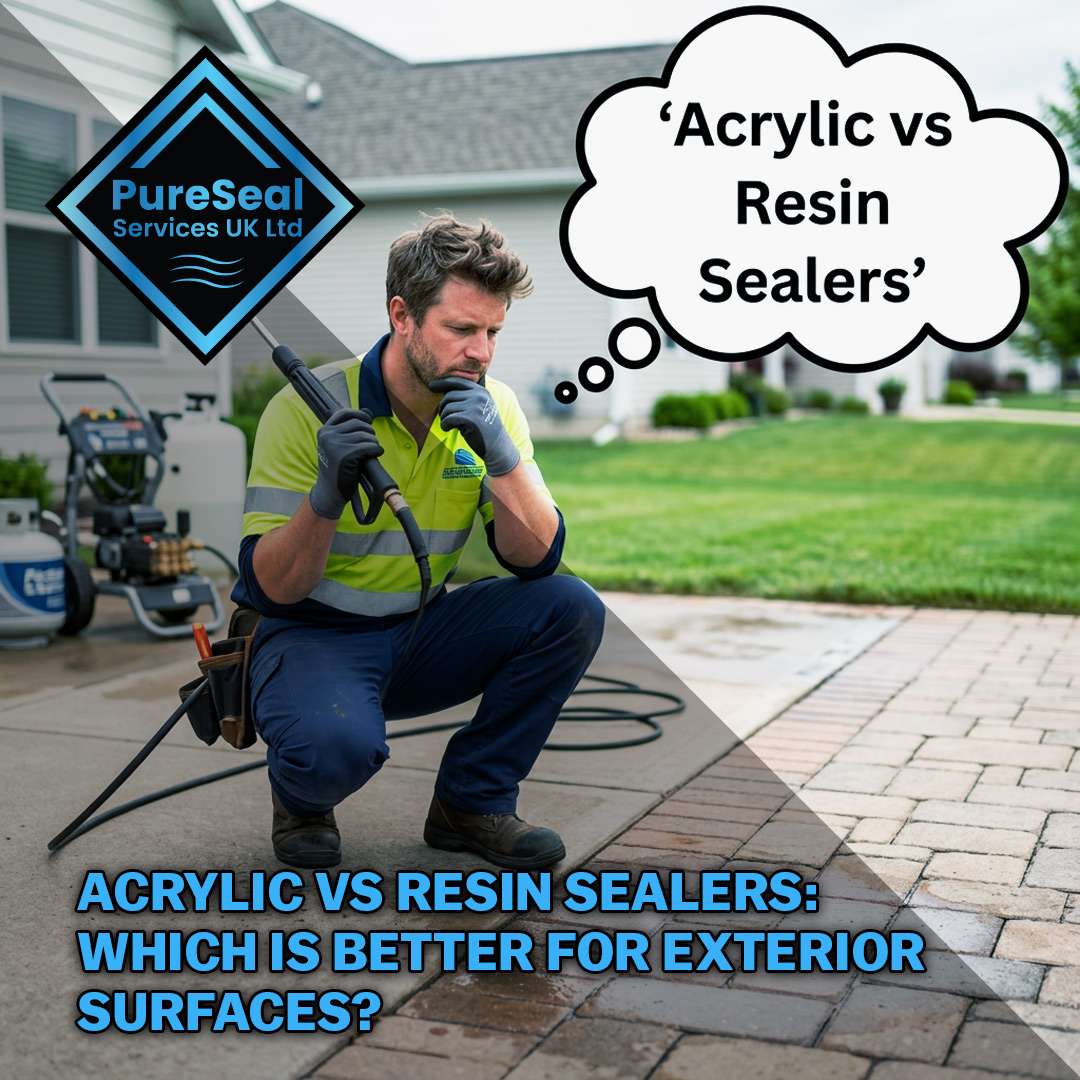
Acrylic vs Resin Sealers: Which Is Better for Exterior Surfaces?
Choosing the right sealer for an exterior surface is just as important as choosing the surface itself. Whether you’re protecting block paving, concrete, natural stone or decorative paving, the correct product can dramatically improve durability, appearance and longevity.
Two of the most common options are acrylic sealers and resin-based sealers. While both provide protection against the British weather, they work in different ways and are suited to different applications.
At Pure Seal Services, we only use premium-grade sealing systems selected for the specific surface being treated. Rather than applying the same product everywhere, we assess every project individually to achieve the best possible long-term results.
This guide compares acrylic and resin sealers, highlighting their advantages, limitations and the situations where each performs best.
Why Exterior Surfaces Need Sealing
Outdoor surfaces face constant exposure to harsh conditions throughout the year.
These include:
- Heavy rainfall
- UV rays
- Frost
- Vehicle traffic
- Oil spills
- Algae and moss
- Dirt build-up
- Temperature fluctuations
Without protection, porous materials gradually absorb moisture and contaminants, leading to staining, fading and premature wear.
Professional sealing creates a protective barrier that helps preserve both appearance and structural integrity.
| Problem | Unsealed Surface | Professionally Sealed Surface |
|---|---|---|
| Water absorption | High | Significantly reduced |
| Colour fading | Gradual | Greatly minimised |
| Oil staining | Common | Improved resistance |
| Weed growth | More frequent | Reduced |
| Cleaning | More difficult | Easier |
| Surface lifespan | Reduced | Extended |
What Is an Acrylic Sealer?
Acrylic sealers are one of the most widely used protective coatings for exterior paving throughout the UK.
They form a thin yet durable protective layer across the surface while allowing the material beneath to retain its appearance.
Modern acrylic formulations offer excellent weather resistance alongside attractive visual enhancement.
Typical applications include:
- Block paving
- Pattern imprinted concrete
- Decorative concrete
- Brick paving
- Garden paths
- Patios
Advantages of Acrylic Sealers
Acrylic sealers remain popular for several reasons.
Excellent Appearance
They can provide:
- Natural matt finish
- Satin finish
- Colour enhancement
- Wet-look appearance
This flexibility allows homeowners to choose the finish that best complements their property.
UV Protection
Sunlight gradually fades coloured paving.
Quality acrylic sealers contain UV-resistant properties that help preserve original colours for much longer.
Water Repellency
Reducing water absorption helps minimise:
- Frost damage
- Surface staining
- Organic growth
- General weathering
Easier Maintenance
Because dirt remains closer to the surface, routine cleaning often becomes quicker and simpler.
What Are Resin Sealers?
Resin sealers generally refer to coatings that contain stronger resin compounds designed to produce an exceptionally durable protective finish.
Depending on the formulation, these products may provide greater chemical resistance and longer-lasting wear protection than some traditional acrylic products.
They are commonly used on:
- Resin-bound surfaces
- Commercial paving
- Industrial flooring
- High-traffic areas
- Decorative hard landscaping
Advantages of Resin Sealers
Resin-based systems offer several benefits.
Exceptional Durability
Many resin products are designed to withstand:
- Heavy vehicle traffic
- Frequent footfall
- Abrasion
- Weather exposure
Strong Chemical Resistance
These sealers often provide excellent protection against:
- Oil
- Grease
- Fuel
- Cleaning chemicals
Longer Maintenance Cycles
In certain applications, resin sealers may require less frequent reapplication than standard coatings.
Acrylic vs Resin at a Glance
| Feature | Acrylic Sealer | Resin Sealer |
|---|---|---|
| Appearance | Excellent | Excellent |
| Colour enhancement | Very good | Very good |
| Durability | Excellent | Outstanding |
| UV protection | Excellent | Excellent |
| Oil resistance | Very good | Excellent |
| Chemical resistance | Good | Outstanding |
| Ease of maintenance | Excellent | Excellent |
| Suitable for domestic paving | Yes | Yes |
| Suitable for heavy commercial use | Limited | Excellent |
Which Surfaces Suit Acrylic Sealers?
Acrylic products are ideal for many domestic applications.
These include:
- Driveways
- Patios
- Garden paths
- Courtyards
- Decorative concrete
- Brick paving
Their versatility makes them one of the most commonly specified sealing systems for residential properties.
Which Surfaces Suit Resin Sealers?
Resin sealers are often selected where additional durability is required.
Examples include:
- Commercial forecourts
- Retail areas
- Public walkways
- High-use driveways
- Resin-bound installations
Where vehicle traffic is particularly heavy, resin systems can offer additional long-term protection.
Appearance Comparison
Many homeowners choose a sealer primarily to improve appearance.
Both systems can achieve attractive results, although there are differences.
| Finish | Acrylic | Resin |
|---|---|---|
| Natural appearance | Excellent | Excellent |
| Satin finish | Excellent | Very good |
| Wet-look finish | Excellent | Excellent |
| Colour enhancement | Strong | Strong |
| Gloss finish | Available | Available |
The final appearance depends not only on the product but also on the condition of the surface before sealing.
Resistance to Weather
Britain’s weather presents one of the greatest challenges for external surfaces.
Rain, frost and changing temperatures gradually wear down unprotected paving.
Both acrylic and resin sealers help reduce:
- Moisture penetration
- Surface erosion
- Freeze-thaw damage
- UV fading
Professional preparation before application plays a major role in determining how well either product performs over time.
Protection Against Stains
Exterior paving is regularly exposed to substances capable of causing permanent staining.
These include:
- Engine oil
- Diesel
- Barbecue grease
- Leaf tannins
- Bird droppings
- Food spills
Sealers create a barrier that slows absorption, giving homeowners much longer to remove spills before permanent marks develop.
Ease of Cleaning
One of the biggest advantages of sealing any external surface is reduced maintenance.
Instead of soaking into porous materials, dirt tends to remain on the protective coating.
Benefits include:
- Faster washing
- Less scrubbing
- Reduced algae attachment
- Easier leaf stain removal
- Improved overall appearance
This can save considerable time over the life of the surface.
Durability Comparison
| Performance Area | Acrylic | Resin |
|---|---|---|
| Residential use | Excellent | Excellent |
| Commercial use | Good | Outstanding |
| UV stability | Excellent | Excellent |
| Water resistance | Excellent | Excellent |
| Abrasion resistance | Very good | Outstanding |
| Long-term wear | Very good | Excellent |
Both products perform exceptionally well when correctly matched to the intended application.
Professional Installation Matters
Even premium products cannot compensate for poor preparation.
Successful sealing normally involves:
- Thorough cleaning.
- Removal of algae and organic growth.
- Drying the surface completely.
- Replacing jointing sand where necessary.
- Protecting surrounding areas.
- Applying the correct amount of product.
- Allowing sufficient curing time.
Incorrect application can lead to:
- Uneven finish
- White blooming
- Poor adhesion
- Reduced durability
- Premature failure
This is why professional installation often produces significantly better long-term results.
Cost vs Value
Homeowners naturally compare prices when considering driveway or patio sealing.
However, the cheapest quotation rarely delivers the best long-term value.
Premium sealing systems generally involve:
- Better preparation.
- Higher-quality products.
- Greater durability.
- Longer-lasting protection.
- Improved appearance.
| Consideration | Budget Sealing | Premium Professional Sealing |
|---|---|---|
| Initial cost | Lower | Higher |
| Product quality | Variable | Premium |
| Lifespan | Often shorter | Longer |
| Appearance | Good | Excellent |
| Long-term value | Moderate | Excellent |
At Pure Seal Services, we focus on delivering premium results rather than competing on price alone. Investing in higher-quality products and professional application helps ensure customers receive a finish that continues to protect their exterior surfaces for years to come.
Choosing the Right Sealer
Selecting between acrylic and resin sealers depends on several factors.
These include:
- Surface type
- Traffic levels
- Desired appearance
- Existing condition
- Exposure to weather
- Maintenance expectations
Rather than assuming one product is universally better than the other, it is important to choose the sealing system that best matches the specific installation.
For many residential driveways and patios, modern acrylic sealers offer an excellent combination of protection, appearance and value. For surfaces exposed to exceptionally heavy wear or demanding environments, resin-based systems may provide additional durability.
By assessing every project individually, using premium materials and applying them correctly, homeowners can enjoy long-lasting protection, enhanced kerb appeal and easier maintenance throughout the lifetime of their exterior surfaces.