


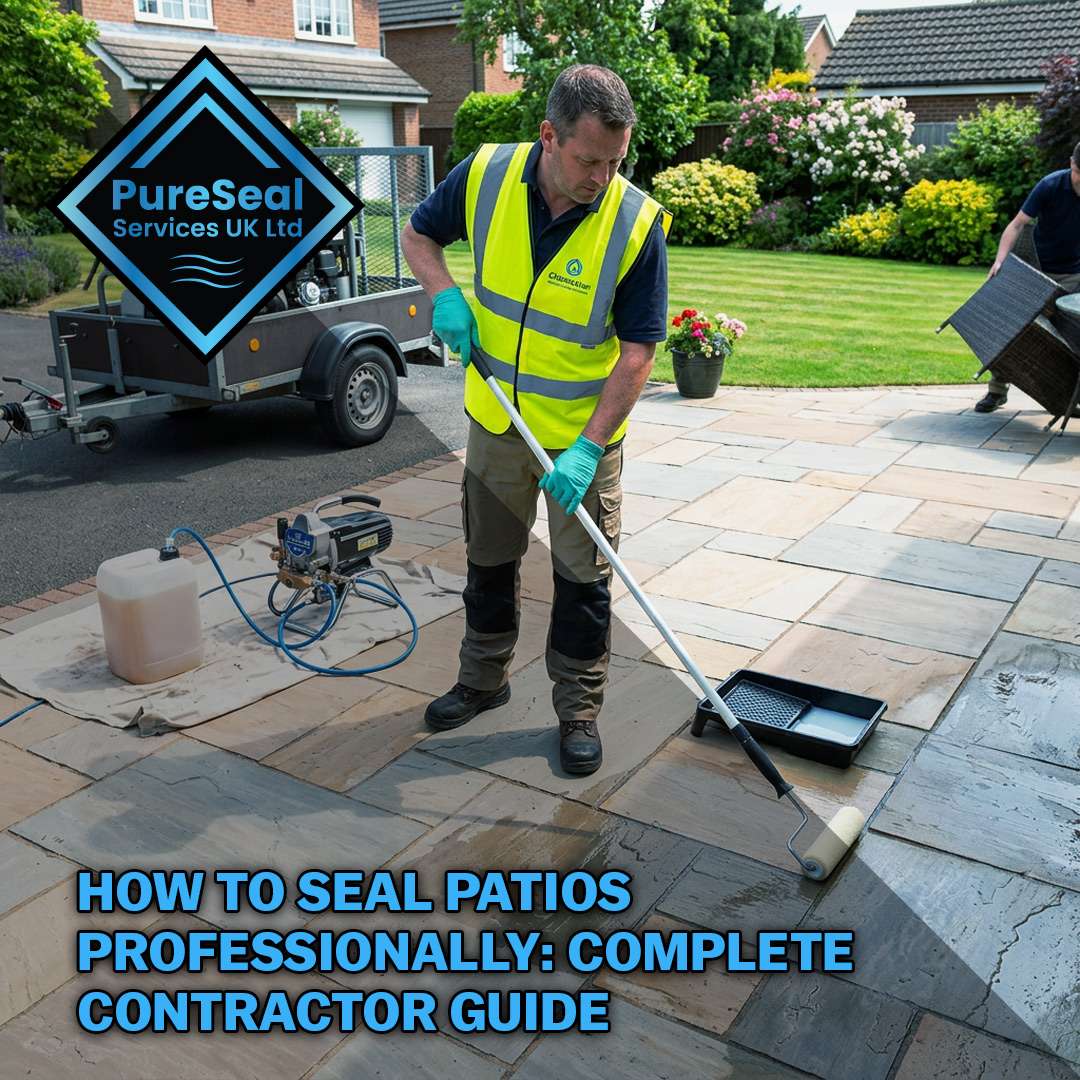
How to Seal Patios Professionally: Complete Contractor Guide
A professionally sealed patio not only looks better but also lasts significantly longer. Whether constructed from natural stone, concrete slabs, porcelain or block paving, patios are constantly exposed to rain, frost, UV rays, algae and everyday wear. Without suitable protection, these surfaces can gradually lose their appearance and become increasingly difficult to maintain.
Professional patio sealing provides a protective barrier that helps preserve colour, reduce staining and make routine cleaning much easier. However, achieving a long-lasting finish depends on much more than simply applying a coating.
At Pure Seal Services, we follow a thorough preparation and application process using premium-grade sealers selected specifically for each surface. This guide explains the professional approach to sealing patios and why proper preparation is essential for outstanding results.
Why Seal a Patio?
Patios are exposed to weather every day of the year.
Common problems include:
- Algae growth
- Black spot
- Lichen
- Oil stains
- Leaf staining
- UV fading
- Water penetration
- Frost damage
- General weathering
A professional sealer helps minimise these issues while enhancing the overall appearance of the patio.
| Benefit | Unsealed Patio | Professionally Sealed Patio |
|---|---|---|
| Water absorption | High | Greatly reduced |
| Staining | More likely | Improved resistance |
| Colour fading | Gradual | Slower fading |
| Cleaning | More difficult | Easier |
| Algae growth | More frequent | Reduced |
| Surface lifespan | Shorter | Extended |
Which Patio Surfaces Can Be Sealed?
Most external paving materials can benefit from professional sealing when the correct product is selected.
Suitable surfaces include:
- Sandstone
- Limestone
- Granite
- Slate
- Concrete slabs
- Decorative concrete
- Block paving patios
- Resin-bound patios
- Porcelain paving (using suitable specialist products where appropriate)
Every material has different levels of porosity, meaning product selection is an important part of the process.
Step 1 – Inspect the Surface
Professional contractors never begin sealing without first carrying out a detailed inspection.
This helps identify:
- Existing damage
- Loose pointing
- Staining
- Previous sealers
- Areas of algae
- Drainage issues
- Repairs that may be required
Applying a sealer over damaged paving is unlikely to achieve the best long-term result.
Step 2 – Remove Organic Growth
One of the biggest causes of patio deterioration is biological growth.
Common contaminants include:
- Green algae
- Black algae
- Moss
- Lichen
These should be removed before sealing begins.
Professional cleaning methods depend on the surface material but should always avoid causing unnecessary damage.
Removing contamination ensures the sealer bonds directly with the paving rather than trapping dirt beneath the protective coating.
Step 3 – Deep Clean the Patio
Once organic growth has been removed, the patio should be thoroughly cleaned.
This removes:
- Dirt
- Dust
- Surface grime
- Leaf staining
- Traffic marks
- General contamination
Professional cleaning also allows the true condition of the paving to be assessed before sealing.
Step 4 – Allow the Surface to Dry
One of the most common mistakes made during patio sealing is applying products too soon.
Moisture trapped inside porous paving can affect:
- Adhesion
- Appearance
- Durability
- Curing
Professional contractors always ensure the patio is sufficiently dry before application begins.
Weather conditions play an important role in determining suitable drying times.
Step 5 – Select the Correct Sealer
No single sealer suits every patio.
The choice depends on:
- Surface material
- Age
- Porosity
- Desired finish
- Level of exposure
- Expected foot traffic
Typical options include:
| Sealer Type | Best For |
|---|---|
| Acrylic | Concrete, block paving, decorative paving |
| Natural finish | Stone patios requiring invisible protection |
| Colour-enhancing | Sandstone and decorative paving |
| Resin-based | High-use areas and specialist installations |
Using the correct product helps maximise both appearance and longevity.
Step 6 – Protect Surrounding Areas
Before application begins, professional installers protect nearby surfaces such as:
- Brickwork
- Render
- Walls
- Doors
- Windows
- Garden furniture
- Plants where appropriate
Careful masking helps produce a clean, professional finish while preventing accidental overspray or splashes.
Step 7 – Apply the Sealer Evenly
Professional application focuses on achieving consistent coverage.
Too much product can lead to:
- Uneven sheen
- Sticky areas
- Whitening
- Longer curing times
Too little product may leave vulnerable areas without adequate protection.
Using the correct application equipment and coverage rates ensures the entire patio receives uniform protection.
Natural Finish or Colour Enhancement?
One of the most common decisions homeowners face is choosing the appearance after sealing.
Natural Finish
Ideal for:
- Traditional gardens
- Heritage properties
- Limestone
- Porcelain
- Contemporary designs
This option provides protection while maintaining the original appearance.
Colour Enhancing Finish
Suitable for:
- Sandstone
- Decorative paving
- Patterned patios
- Block paving
These products enrich existing colours without changing them completely.
| Finish | Appearance |
|---|---|
| Natural | Original look retained |
| Satin | Slight enhancement |
| Colour enhancing | Richer colours |
| Wet-look | Deeper colour with noticeable sheen |
Why Preparation Is More Important Than the Sealer
Many people focus entirely on which product is being used.
In reality, preparation often determines how long the finished coating lasts.
Proper preparation helps achieve:
- Better adhesion
- Longer lifespan
- Improved appearance
- Greater stain resistance
- More even coverage
Skipping preparation may result in premature coating failure regardless of product quality.
Weather Conditions Matter
Professional patio sealing should only take place under suitable weather conditions.
Factors considered include:
- Rain forecast
- Air temperature
- Surface temperature
- Humidity
- Wind
Applying sealers during poor weather can reduce performance and affect the final appearance.
Common Mistakes to Avoid
Professional contractors avoid several common problems.
| Mistake | Potential Result |
|---|---|
| Sealing damp paving | Poor adhesion |
| Inadequate cleaning | Dirt trapped beneath coating |
| Applying excessive product | Uneven finish |
| Ignoring weather forecasts | Curing problems |
| Incorrect product selection | Reduced durability |
| Sealing damaged paving | Poor overall results |
Avoiding these issues significantly improves long-term performance.
Benefits of Professional Patio Sealing
Professional sealing provides a range of practical advantages.
These include:
- Easier cleaning
- Improved appearance
- Reduced staining
- Better water repellency
- Longer-lasting paving
- Reduced algae attachment
- Improved colour retention
- Lower maintenance requirements
Many homeowners also appreciate the improved kerb appeal created by a freshly sealed patio.
How Long Does Patio Sealer Last?
Several factors influence lifespan.
These include:
- Surface type
- Quality of preparation
- Product selection
- Weather exposure
- Maintenance
- Foot traffic
| Patio Location | Typical Performance |
|---|---|
| Sheltered garden | Longer lifespan |
| Open south-facing patio | Moderate to long lifespan |
| High-use entertaining area | Depends on usage |
| Commercial outdoor seating | Higher wear rate |
Regular maintenance helps maximise the effectiveness of the protective coating.
Professional Maintenance After Sealing
Although sealing dramatically reduces maintenance, some routine care is still recommended.
Simple maintenance includes:
- Sweeping leaves regularly.
- Cleaning spills promptly.
- Removing debris.
- Avoiding harsh chemical cleaners unless suitable.
- Inspecting the patio periodically.
These straightforward steps help maintain both appearance and protection for longer.
Is Professional Patio Sealing Worth the Cost?
Professional sealing is an investment in the long-term condition of your outdoor space.
While premium services generally cost more than budget alternatives, they often deliver significantly greater value through:
- Superior preparation.
- Premium sealing products.
- Longer-lasting protection.
- Improved appearance.
- Reduced future maintenance.
- Better resistance to weather and staining.
Choosing a premium contractor means paying for experience, careful preparation and high-quality materials rather than simply the application of a coating.
At Pure Seal Services, every patio sealing project is tailored to the individual surface, ensuring the most appropriate products and techniques are used to achieve durable, attractive and long-lasting results. Whether protecting natural stone, concrete or decorative paving, professional sealing helps preserve your patio’s appearance while making it easier to maintain throughout the changing British seasons.