
Professional Pressure Washing vs DIY Rental Machines Explained
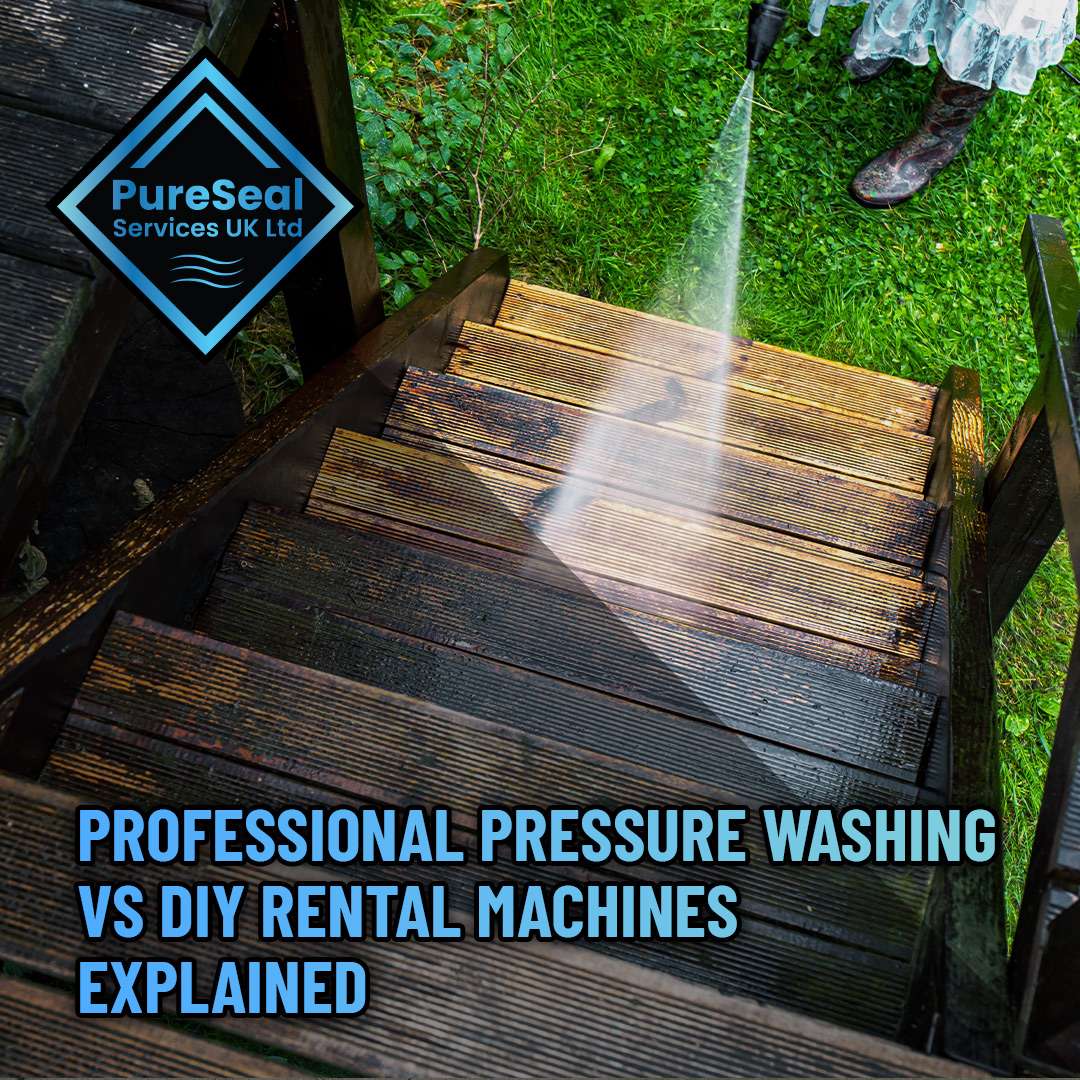
Pressure washing is one of the most effective ways to restore the appearance of exterior surfaces. From driveways and patios to walls, pathways, decking, and commercial premises, pressure washing can remove years of dirt, algae, moss, and staining in a relatively short period of time.
With pressure washer hire readily available across the UK, many property owners wonder whether renting a machine and tackling the work themselves is the best option, or whether investing in a professional service offers better value.
While both approaches can produce results, there are significant differences in equipment, cleaning quality, safety, efficiency, and long-term outcomes. Understanding these differences can help homeowners and businesses make an informed decision about which option is most suitable for their property.
For professional exterior cleaning and pressure washing services, visit Pure Seal Services.
What Is Pressure Washing?
Pressure washing uses high-pressure water to remove contaminants from exterior surfaces. The process can eliminate:
- Dirt and grime
- Moss
- Algae
- Lichen
- Mould
- Surface staining
- Traffic film
- Atmospheric pollution
The effectiveness of pressure washing depends heavily on the equipment being used, the condition of the surface, and the operator’s knowledge of correct cleaning techniques.
Common Areas Suitable for Pressure Washing
| Surface | Typical Contaminants |
|---|---|
| Patios | Algae, dirt, moss |
| Driveways | Oil stains, tyre marks, weeds |
| Pathways | Moss and grime |
| Walls | Pollution and biological growth |
| Commercial Areas | Traffic film and dirt |
| Car Parks | Oil and general contamination |
Not all surfaces require the same cleaning approach, which is where professional expertise often becomes valuable.
Understanding DIY Rental Pressure Washers
DIY pressure washer hire has become increasingly popular because it offers homeowners access to more powerful equipment than many domestic machines.
Rental companies typically provide:
- Petrol-powered pressure washers
- Electric pressure washers
- Basic attachments
- Hoses and accessories
At first glance, hiring a machine may appear to be the more economical option.
Typical DIY Rental Costs
| Item | Typical Cost |
|---|---|
| Pressure Washer Hire (1 Day) | £60 – £150 |
| Weekend Hire | £120 – £250 |
| Fuel Costs | £10 – £40 |
| Surface Cleaner Attachment | £20 – £50 |
| Transportation Costs | Variable |
| Protective Equipment | £20 – £100+ |
While the initial hire charge may seem reasonable, the total cost can increase once additional equipment and consumables are considered.
What Professional Pressure Washing Includes
Professional pressure washing services typically involve much more than simply operating a machine.
A professional contractor will often provide:
- Site assessment
- Surface-specific cleaning methods
- Commercial-grade equipment
- Specialist treatments
- Waste management
- Safety procedures
- Optional sealing services
Professional cleaning focuses on achieving the best possible results while protecting the surface being cleaned.
Typical Professional Service Elements
| Service Component | Included by Professionals |
|---|---|
| Property Assessment | Yes |
| Surface Inspection | Yes |
| Specialist Equipment | Yes |
| Commercial Cleaning Solutions | Yes |
| Insurance Cover | Yes |
| Operator Experience | Yes |
| Aftercare Advice | Yes |
These additional factors often influence the quality and longevity of the final result.
Equipment Differences
One of the biggest misconceptions is that all pressure washers perform similarly.
In reality, there can be substantial differences between DIY rental equipment and professional machinery.
Professional contractors often use industrial-grade systems designed for continuous operation and superior cleaning performance.
Equipment Comparison
| Feature | DIY Rental Machine | Professional Equipment |
|---|---|---|
| Pressure Output | Moderate to High | High and Adjustable |
| Water Flow Rate | Moderate | Significantly Higher |
| Reliability | Variable | Commercial Grade |
| Cleaning Speed | Slower | Faster |
| Surface Adaptability | Limited | Extensive |
| Specialist Attachments | Basic | Advanced |
Water flow rate is often more important than pressure alone. Professional systems generally combine high pressure with significantly greater water volume, resulting in faster and more effective cleaning.
Cleaning Results
Perhaps the most noticeable difference between professional and DIY pressure washing is the quality of the finished result.
DIY users often remove visible dirt but struggle to eliminate deeply embedded contaminants.
Professional cleaning frequently achieves:
- More uniform cleaning
- Deeper stain removal
- Better algae elimination
- More consistent appearance
- Improved restoration of original colours
Common DIY Challenges
| Challenge | Impact |
|---|---|
| Uneven Cleaning | Patchy appearance |
| Tiger Striping | Visible cleaning lines |
| Missed Areas | Inconsistent finish |
| Insufficient Power | Limited stain removal |
| Incorrect Technique | Surface damage risk |
Professional operators understand how to achieve consistent coverage and avoid these common issues.
Risk of Surface Damage
Pressure washing can cause significant damage when used incorrectly.
Many property owners assume higher pressure always delivers better results. In reality, excessive pressure can damage various surfaces.
Potential issues include:
- Etched concrete
- Damaged pointing
- Dislodged jointing sand
- Chipped paving
- Damaged render
- Timber splintering
Surfaces Frequently Damaged by DIY Cleaning
| Surface | Common DIY Mistake |
|---|---|
| Sandstone | Excessive pressure |
| Block Paving | Loss of jointing sand |
| Render | Surface scarring |
| Decking | Splintering timber |
| Roof Tiles | Protective coating damage |
| Natural Stone | Surface erosion |
Professional cleaning relies on selecting the correct pressure and technique rather than simply using maximum power.
Safety Considerations
Pressure washing equipment can be dangerous when used improperly.
High-pressure water jets are capable of causing injuries and property damage.
Potential risks include:
- Slips and falls
- Flying debris
- Electrical hazards
- Surface damage
- Personal injury
Professionals undergo training and use appropriate safety procedures to minimise these risks.
Safety Comparison
| Factor | DIY User | Professional Service |
|---|---|---|
| Training | Usually Limited | Professional Experience |
| Insurance | Typically None | Fully Insured |
| Risk Assessment | Rarely Conducted | Standard Practice |
| Safety Equipment | Variable | Professional Grade |
Safety becomes particularly important when cleaning large areas, commercial premises, or difficult-to-access surfaces.
Time Investment
Pressure washing often takes longer than expected.
Many homeowners underestimate:
- Setup time
- Surface preparation
- Cleaning duration
- Equipment collection
- Equipment return
- Post-cleaning tidy-up
Time Comparison
| Task | DIY Approach | Professional Service |
|---|---|---|
| Equipment Collection | Required | Not Required |
| Setup | User Responsibility | Included |
| Cleaning | Several Hours to Days | Typically Faster |
| Clean-Up | User Responsibility | Included |
| Equipment Return | Required | Not Applicable |
For larger properties, professional cleaning can save a considerable amount of time.
Treatment of Organic Growth
One of the biggest differences between professional and DIY approaches is how organic growth is managed.
Pressure washing alone may remove visible moss and algae, but spores often remain.
Without additional treatment, regrowth can occur relatively quickly.
Professional services frequently incorporate specialist biocidal treatments to address the underlying cause.
Organic Growth Control
| Method | Effectiveness |
|---|---|
| Water Only | Temporary |
| DIY Pressure Washing | Moderate |
| Professional Cleaning Plus Treatment | Long-Term Improvement |
This is often why professionally cleaned surfaces stay cleaner for longer.
Cost Comparison
Many property owners initially focus on price when deciding between DIY and professional services.
However, total costs should include:
- Equipment hire
- Fuel
- Travel
- Cleaning products
- Time investment
- Potential repair costs
Typical Cost Comparison
| Option | Typical Cost Range |
|---|---|
| DIY Rental Machine | £100 – £400+ |
| Professional Patio Cleaning | £250 – £1,500+ |
| Professional Driveway Cleaning | £300 – £2,000+ |
| Large Commercial Cleaning | Bespoke Pricing |
Professional services generally cost more upfront, particularly when delivered by experienced contractors using premium equipment and advanced cleaning methods. However, many property owners consider the investment worthwhile due to the superior results and reduced risk.
When DIY Pressure Washing May Be Suitable
There are situations where DIY pressure washing can be a practical option.
Smaller projects may be manageable for homeowners who:
- Have previous experience
- Understand surface requirements
- Possess suitable safety equipment
- Have sufficient time available
Projects Often Suitable for DIY
| Project Type | Suitability |
|---|---|
| Small Garden Path | Good |
| Basic Patio Rinse | Moderate |
| Outdoor Furniture Cleaning | Good |
| Light Surface Dirt Removal | Good |
However, even relatively simple projects require care to avoid damage.
When Professional Pressure Washing Is the Better Choice
Professional services are often recommended for:
- Large properties
- Commercial premises
- Delicate surfaces
- Heavy staining
- Extensive moss growth
- Premium paving materials
The value of professional expertise increases significantly as project complexity grows.
Projects Best Left to Professionals
| Project Type | Reason |
|---|---|
| Large Driveways | Time and equipment requirements |
| Natural Stone Patios | Surface protection |
| Commercial Properties | Professional standards |
| Heavy Algae Growth | Specialist treatment needed |
| Render Cleaning | Risk of damage |
| Extensive Hard Landscaping | Consistent results required |
Professional contractors can tailor cleaning methods to suit the specific material and condition of each surface.
The Importance of Aftercare
Pressure washing is only one part of maintaining exterior surfaces.
Without proper aftercare, cleaned surfaces may quickly become dirty again.
Professional services often provide guidance on:
- Routine maintenance
- Future cleaning schedules
- Surface protection
- Sealing options
- Weed prevention
Aftercare Options
| Maintenance Method | Benefit |
|---|---|
| Regular Sweeping | Reduces dirt build-up |
| Weed Management | Preserves appearance |
| Drainage Maintenance | Limits algae growth |
| Professional Sealing | Enhanced protection |
| Annual Cleaning | Long-term upkeep |
For property owners looking to maximise the lifespan and appearance of patios, driveways, and external surfaces, a structured maintenance plan can often deliver better long-term results than occasional DIY cleaning alone.
For premium pressure washing, surface restoration, and exterior cleaning services, visit Pure Seal Services.
Understanding Pressure Versus Cleaning Performance
One of the most common misconceptions surrounding pressure washing is that higher pressure automatically means better cleaning results. In reality, professional exterior cleaning is far more nuanced than simply directing powerful water at a surface.
Many DIY users focus solely on the pressure rating displayed on a rental machine. While pressure is important, professional contractors understand that cleaning performance depends on a combination of factors, including:
- Water flow rate
- Nozzle selection
- Surface type
- Water temperature
- Cleaning chemicals
- Operator technique
- Dwell time
A machine producing extremely high pressure but low water volume may struggle to remove certain contaminants efficiently. Conversely, professional equipment often combines substantial water flow with carefully controlled pressure settings, allowing operators to clean more effectively while reducing the risk of damage.
Factors That Influence Cleaning Results
| Factor | DIY Rental Machine | Professional Service |
|---|---|---|
| Pressure Control | Basic | Precise |
| Water Volume | Moderate | High |
| Surface Assessment | User Judgement | Professional Evaluation |
| Chemical Treatments | Limited | Specialist Products |
| Cleaning Technique | Variable | Experienced Application |
Professional operators understand that different surfaces require different approaches. What works on concrete may be completely unsuitable for sandstone or decorative paving.
Why Surface Cleaners Make a Difference
A significant advantage of professional pressure washing is the use of specialist surface cleaning attachments.
Many DIY users clean patios and driveways using a standard lance. While this can remove dirt, it often creates uneven cleaning patterns commonly known as “tiger striping”.
These visible lines occur when overlapping passes fail to clean uniformly.
Professional contractors frequently use commercial surface cleaners that:
- Deliver even cleaning coverage
- Reduce striping
- Improve efficiency
- Minimise overspray
- Protect delicate surfaces
Standard Lance vs Surface Cleaner
| Feature | Standard Lance | Commercial Surface Cleaner |
|---|---|---|
| Cleaning Speed | Slower | Faster |
| Consistency | Variable | Highly Uniform |
| Risk of Striping | High | Low |
| Water Control | Limited | Improved |
| Professional Finish | Difficult | Easier to Achieve |
The visual difference between the two methods can be substantial, particularly on larger driveways and patios.
The Hidden Costs of DIY Pressure Washing
Many homeowners choose DIY pressure washer hire because it initially appears less expensive. However, the true cost is often greater than expected once all factors are considered.
Common hidden expenses include:
- Equipment deposits
- Fuel purchases
- Extension hoses
- Surface cleaner attachments
- Transportation costs
- Cleaning chemicals
- Protective clothing
- Potential repair costs
Additionally, there is the value of your own time.
A project that appears manageable on paper can quickly become a full weekend commitment.
Potential DIY Expenses
| Item | Estimated Cost |
|---|---|
| Machine Hire | £60 – £150 |
| Fuel | £10 – £40 |
| Surface Cleaner Hire | £20 – £50 |
| Cleaning Chemicals | £20 – £100 |
| Protective Equipment | £20 – £100 |
| Transportation | Variable |
| Potential Surface Repairs | £100 – £5,000+ |
Unexpected damage can significantly increase overall costs if the wrong techniques are used.
Dealing with Black Spot Lichen
Black spot lichen is one of the most challenging contaminants found on UK patios and driveways.
These stubborn black marks commonly appear on:
- Sandstone
- Limestone
- Concrete paving
- Block paving
- Natural stone surfaces
Many DIY users assume pressure washing alone will remove black spot. Unfortunately, this is rarely the case.
Black spot lichen develops deep root structures that penetrate porous surfaces.
Removing it often requires:
- Specialist treatments
- Appropriate dwell times
- Multiple cleaning stages
- Professional knowledge
Black Spot Removal Methods
| Method | Typical Effectiveness |
|---|---|
| Sweeping | None |
| Domestic Pressure Washer | Low |
| Rental Pressure Washer | Moderate |
| Professional Treatment Programme | High |
This is one of the primary reasons professionally cleaned patios often achieve noticeably better results than DIY attempts.
Environmental Considerations
Professional exterior cleaning companies increasingly take environmental responsibilities seriously.
Modern cleaning programmes often focus on:
- Responsible water usage
- Controlled chemical application
- Surface-specific treatments
- Proper waste management
DIY users may unintentionally allow contaminated runoff to enter drainage systems or use inappropriate cleaning products.
Professional contractors understand how to minimise environmental impact while still delivering excellent cleaning outcomes.
Environmental Management Comparison
| Consideration | DIY Cleaning | Professional Service |
|---|---|---|
| Waste Water Control | Limited | Managed |
| Chemical Selection | Variable | Surface Appropriate |
| Application Rates | Often Unknown | Controlled |
| Environmental Awareness | Variable | Typically Higher |
Responsible cleaning protects both the property and the surrounding environment.
Commercial Properties and Professional Standards
For commercial property owners, professional pressure washing often becomes a necessity rather than a choice.
Customers, employees, and visitors form opinions about a business before they even enter the building.
Dirty external surfaces can negatively affect perceptions of:
- Professionalism
- Maintenance standards
- Customer service
- Brand image
Commercial pressure washing is frequently used on:
- Retail premises
- Offices
- Warehouses
- Hotels
- Restaurants
- Educational facilities
Commercial Areas Commonly Cleaned
| Area | Benefit |
|---|---|
| Building Entrances | Improved first impressions |
| Car Parks | Better appearance and safety |
| Loading Areas | Cleaner working environment |
| Walkways | Reduced slip hazards |
| Outdoor Seating Areas | Enhanced customer experience |
Professional contractors can often complete large-scale cleaning projects with minimal disruption to daily operations.
Why Experience Matters
Pressure washing may appear straightforward, but achieving professional results requires experience.
Experienced operators understand:
- How different materials react
- Appropriate pressure settings
- Correct nozzle selection
- Effective cleaning sequences
- Surface restoration techniques
A lack of experience can lead to disappointing results or expensive mistakes.
Common DIY Errors
| Mistake | Potential Outcome |
|---|---|
| Excessive Pressure | Surface damage |
| Incorrect Nozzle Use | Etching and marking |
| Uneven Cleaning Patterns | Poor appearance |
| Insufficient Preparation | Incomplete cleaning |
| Skipping Treatments | Rapid regrowth |
Professional expertise helps avoid these issues while delivering a more consistent finish.
Protecting Property Value Through Professional Cleaning
Exterior surfaces contribute significantly to overall property presentation.
Driveways, patios, paths, and walls that appear neglected can detract from an otherwise well-maintained property.
Professional pressure washing helps restore:
- Original colours
- Surface definition
- Kerb appeal
- Overall presentation
Areas That Influence Kerb Appeal
| Property Feature | Visual Impact |
|---|---|
| Driveway | High |
| Front Path | High |
| Patio | Medium to High |
| Walls | Medium |
| Commercial Forecourt | Very High |
For homeowners planning to sell, professional cleaning can often make a noticeable difference to first impressions.
The Role of Sealing After Pressure Washing
One major advantage offered by professional contractors is the option to seal surfaces after cleaning.
Pressure washing removes contaminants, but sealing helps protect the surface against future staining and organic growth.
Depending on the material, sealing can provide benefits such as:
- Reduced water absorption
- Easier maintenance
- Improved appearance
- Enhanced durability
- Slower algae growth
Benefits of Professional Sealing
| Benefit | Result |
|---|---|
| Water Resistance | Less moisture penetration |
| Stain Protection | Easier cleaning |
| Enhanced Appearance | Richer surface finish |
| Reduced Organic Growth | Longer-lasting results |
| Surface Preservation | Extended lifespan |
Professional sealing is particularly popular for premium patios, driveways, and natural stone installations where long-term protection is a priority.
For homeowners and businesses seeking the highest standards of exterior cleaning, professional pressure washing often provides a level of expertise, equipment capability, and surface protection that DIY rental machines simply cannot replicate. For professional pressure washing, surface restoration, and exterior cleaning services, visit Pure Seal Services.