
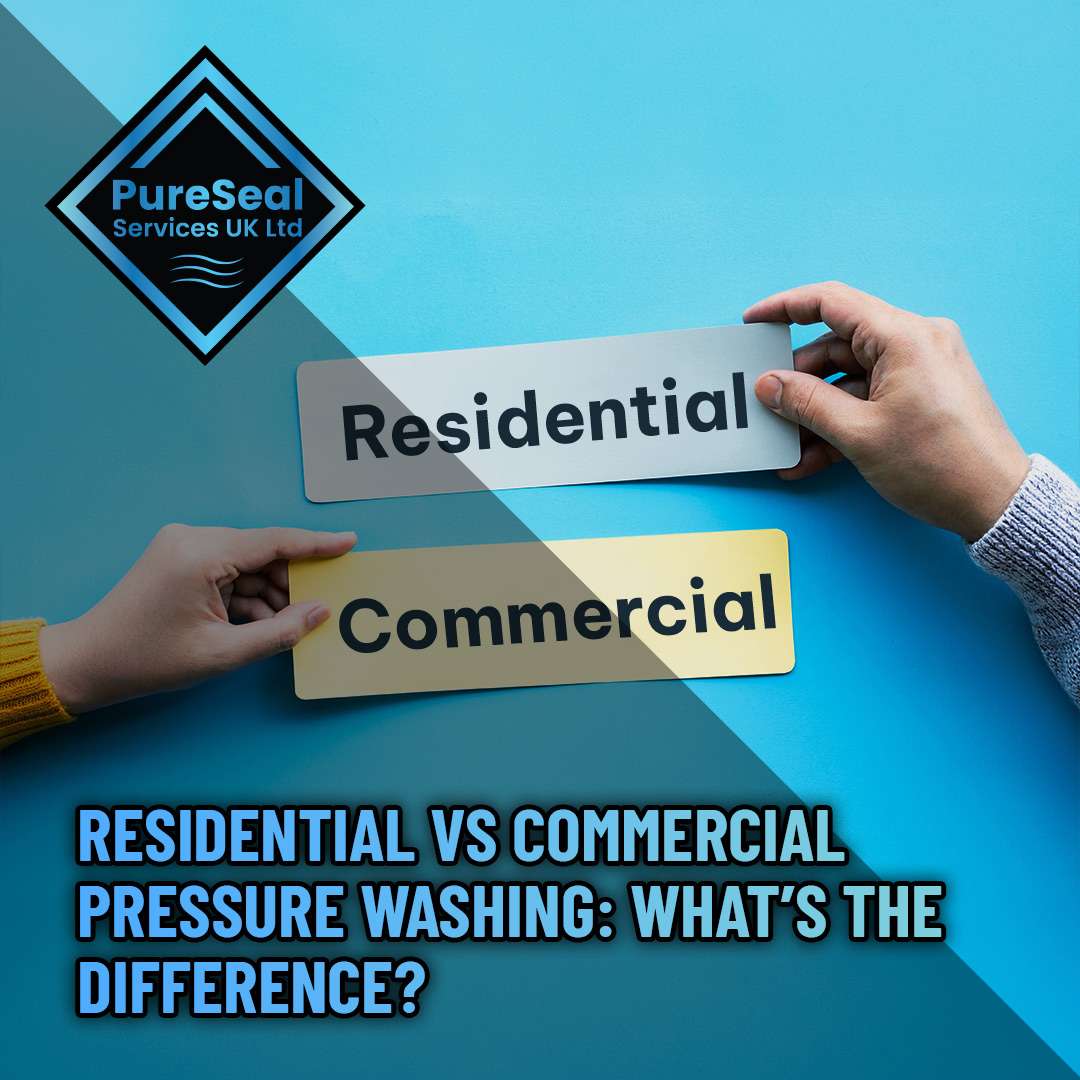
Residential vs Commercial Pressure Washing: What’s the Difference?
Pressure washing is one of the most effective ways to restore and maintain exterior surfaces. Whether it’s removing years of grime from a domestic driveway or keeping a commercial premises looking professional for customers and visitors, pressure washing delivers impressive results when carried out correctly.
However, many property owners are unaware that residential and commercial pressure washing are very different services. The equipment, planning, safety requirements, timescales and cleaning methods can vary significantly depending on the type of property being cleaned.
At Pure Seal Services, we provide professional exterior cleaning solutions tailored to the unique requirements of both domestic and commercial clients. Understanding the differences between residential and commercial pressure washing can help property owners choose the right service and achieve the best long-term results.
What Is Residential Pressure Washing?
Residential pressure washing focuses on cleaning exterior surfaces around private homes. The goal is usually to improve appearance, remove dirt and organic growth, and protect surfaces from deterioration.
Common residential pressure washing services include:
- Driveway cleaning
- Patio cleaning
- Pathway cleaning
- Garden wall cleaning
- Decking cleaning
- Fence cleaning
- Exterior brickwork cleaning
- Garage forecourt cleaning
Homeowners often request pressure washing to restore kerb appeal, prepare a property for sale, or maintain outdoor spaces that have become slippery due to moss and algae growth.
Typical Residential Cleaning Areas
| Surface | Common Issues |
|---|---|
| Block paving | Moss, weeds, oil stains |
| Concrete driveways | Dirt, tyre marks, algae |
| Patios | Lichen, moss, black spots |
| Decking | Green algae, weather staining |
| Brick walls | Atmospheric pollution, algae |
| Garden paths | Slippery organic growth |
Residential projects are generally smaller in scale and can often be completed within a single day depending on the size and condition of the surfaces involved.
What Is Commercial Pressure Washing?
Commercial pressure washing involves cleaning larger properties, business premises and public-facing environments where cleanliness directly affects customer perception and health and safety standards.
Commercial properties often experience higher levels of foot traffic, vehicle movement and environmental contamination, requiring more specialised cleaning techniques.
Typical commercial pressure washing projects include:
- Retail parks
- Office buildings
- Restaurants
- Hotels
- Schools
- Warehouses
- Industrial units
- Car parks
- Distribution centres
- Healthcare facilities
Unlike residential work, commercial pressure washing often forms part of an ongoing maintenance programme rather than a one-off cleaning service.
Typical Commercial Cleaning Areas
| Surface | Common Issues |
|---|---|
| Car parks | Oil stains, chewing gum, tyre marks |
| Loading bays | Industrial grime, fuel spills |
| Shopfronts | Dirt, pollution staining |
| Walkways | Algae, slip hazards |
| Building exteriors | Atmospheric contamination |
| Service yards | Heavy-duty dirt accumulation |
Commercial environments require careful planning to minimise disruption to staff, customers and daily business operations.
Scale and Size of the Project
One of the biggest differences between residential and commercial pressure washing is the scale of the work.
A typical domestic driveway may measure between 40 and 100 square metres. In comparison, a commercial car park can cover several thousand square metres.
Comparison of Project Scale
| Factor | Residential | Commercial |
|---|---|---|
| Average area | 40–200 m² | 500–10,000+ m² |
| Duration | Few hours to one day | Several days or weeks |
| Personnel required | 1–2 technicians | Larger cleaning teams |
| Equipment size | Standard professional equipment | Industrial-grade machinery |
| Planning requirements | Minimal | Extensive |
Larger commercial projects often require site surveys, risk assessments and detailed scheduling before any cleaning work begins.
Equipment Requirements
Although both services use pressure washing equipment, commercial cleaning often demands more powerful machinery.
Residential pressure washing typically uses professional systems capable of safely cleaning patios, driveways and walls without damaging surfaces.
Commercial projects frequently require:
- High-capacity pressure washers
- Industrial surface cleaners
- Hot water pressure washing systems
- Steam cleaning equipment
- Water recovery systems
- Specialist access equipment
The choice of equipment depends on the surface type, contamination levels and environmental considerations.
Equipment Comparison
| Equipment Type | Residential Use | Commercial Use |
|---|---|---|
| Pressure washers | Standard professional systems | Industrial systems |
| Surface cleaners | Small to medium size | Large-scale units |
| Water recovery | Rarely required | Frequently required |
| Hot water systems | Occasionally used | Commonly used |
| Steam cleaning | Limited applications | Regular applications |
Commercial equipment is designed for extended operation and higher productivity levels across large sites.
Health and Safety Considerations
Health and safety requirements differ significantly between residential and commercial pressure washing.
For residential work, safety considerations generally focus on:
- Protecting residents
- Preventing slips and trips
- Safe equipment operation
- Protecting nearby landscaping
Commercial projects often involve far stricter requirements.
Commercial Safety Measures May Include
- Detailed risk assessments
- Method statements
- Site-specific safety plans
- Traffic management systems
- Pedestrian diversions
- Working at height procedures
- Environmental controls
- Staff safety briefings
Many commercial clients require contractors to provide comprehensive health and safety documentation before work can begin.
Working Hours and Scheduling
Residential pressure washing usually takes place during normal daytime hours.
Homeowners are generally flexible regarding when work is carried out, provided access is available and weather conditions are suitable.
Commercial cleaning often requires more strategic scheduling.
Common Commercial Cleaning Times
| Time Period | Reason |
|---|---|
| Early mornings | Minimal customer disruption |
| Evenings | Reduced pedestrian traffic |
| Overnight | Allows uninterrupted cleaning |
| Weekends | Avoids peak business hours |
| Bank holidays | Minimises operational impact |
Some commercial sites operate around the clock, requiring cleaning schedules that fit around ongoing business activities.
Cleaning Challenges
The type of contamination encountered can vary dramatically between residential and commercial properties.
Residential surfaces are commonly affected by:
- Moss
- Algae
- Lichen
- Dirt
- Leaf staining
- General weathering
Commercial environments often face more demanding cleaning challenges.
Common Commercial Contaminants
| Contaminant | Typical Location |
|---|---|
| Oil spills | Car parks |
| Fuel residue | Service yards |
| Chewing gum | Retail areas |
| Food waste | Restaurant exteriors |
| Industrial grime | Warehouses |
| Graffiti | Public-facing buildings |
These contaminants may require specialist treatments in addition to pressure washing.
Environmental Responsibilities
Environmental considerations are increasingly important for both residential and commercial cleaning projects.
Responsible pressure washing involves managing water usage and preventing contaminated runoff from entering drainage systems.
Commercial sites often face stricter environmental obligations.
Environmental Factors
| Consideration | Residential | Commercial |
|---|---|---|
| Water management | Basic | Advanced |
| Wastewater control | Limited | Often required |
| Environmental reporting | Rare | Sometimes required |
| Chemical management | Basic | Highly controlled |
Professional contractors must ensure cleaning processes comply with relevant environmental regulations.
Customer Expectations
Residential customers generally focus on appearance and property value.
Homeowners want surfaces to look cleaner, brighter and more attractive.
Commercial clients often have broader objectives.
These may include:
- Maintaining brand image
- Improving customer impressions
- Meeting compliance standards
- Reducing slip hazards
- Extending surface lifespan
- Supporting property maintenance programmes
The outcome is not just about appearance but also operational performance and risk management.
Pricing Differences
Commercial pressure washing is usually priced differently from residential work due to the complexity, scale and resources involved.
Several factors influence pricing:
- Surface area
- Level of contamination
- Access requirements
- Water availability
- Health and safety requirements
- Equipment needs
- Scheduling restrictions
Typical Pricing Factors
| Factor | Impact on Cost |
|---|---|
| Site size | Higher area increases project value |
| Heavy staining | Additional treatment required |
| Restricted access | Increased labour time |
| Out-of-hours work | Higher operational costs |
| Water recovery requirements | Additional equipment needed |
| Complex safety requirements | Increased preparation time |
Property owners should be cautious when comparing quotes solely on price. Professional pressure washing requires investment in equipment, training, insurance and safe working practices.
At Pure Seal Services, our focus is on delivering premium-quality results using professional equipment, proven cleaning methods and meticulous attention to detail. While this often places us towards the higher end of the market, clients benefit from exceptional workmanship, thorough cleaning processes and long-lasting results.
Surface Protection After Cleaning
Another important difference involves post-cleaning treatments.
Residential customers frequently choose additional protection for surfaces after pressure washing.
Popular options include:
- Block paving sealing
- Patio sealing
- Sand replacement for block paving
- Surface protection treatments
These treatments help maintain appearance and reduce future maintenance requirements.
Commercial clients may also invest in protective treatments, particularly in high-traffic environments where maintaining cleanliness is important.
Benefits of Surface Protection
| Benefit | Residential | Commercial |
|---|---|---|
| Reduced algae growth | ✓ | ✓ |
| Easier maintenance | ✓ | ✓ |
| Enhanced appearance | ✓ | ✓ |
| Improved durability | ✓ | ✓ |
| Reduced long-term costs | ✓ | ✓ |
Protective treatments can significantly extend the results achieved through professional pressure washing.
Training and Expertise Requirements
While residential cleaning requires professional knowledge and experience, commercial pressure washing often demands additional specialist expertise.
Commercial contractors may need experience with:
- Large-scale cleaning operations
- Industrial cleaning systems
- Environmental compliance
- Site management
- Risk assessment procedures
- Commercial property maintenance
The ability to adapt cleaning methods to different environments is crucial for achieving safe and effective results.
Choosing the Right Service for Your Property
The correct approach depends entirely on the type of property and the objectives of the cleaning project.
Residential properties typically benefit from tailored cleaning programmes focused on aesthetics, safety and property preservation.
Commercial properties require solutions that balance appearance, operational requirements, compliance obligations and customer experience.
Professional assessment ensures the appropriate equipment, cleaning techniques and scheduling arrangements are selected for each project. Whether cleaning a private driveway, a retail forecourt or a large commercial estate, understanding the differences between residential and commercial pressure washing helps property owners make informed decisions about maintaining their exterior surfaces.
Seasonal Considerations for Residential and Commercial Pressure Washing
The time of year can have a significant impact on both residential and commercial pressure washing projects. Different weather conditions create unique challenges and opportunities for exterior cleaning, making seasonal planning an important part of property maintenance.
For residential properties, spring is often the busiest period. Homeowners typically want patios, driveways and outdoor entertaining areas cleaned after the winter months have left behind dirt, moss and algae. Summer is also popular, particularly for those preparing gardens and outdoor spaces for gatherings or property viewings.
Commercial properties, however, often follow a different maintenance schedule. Many businesses arrange regular cleaning throughout the year to ensure their premises consistently present a professional image.
Seasonal Cleaning Priorities
| Season | Residential Focus | Commercial Focus |
|---|---|---|
| Spring | Patios, driveways, garden paths | Customer-facing areas, entrances |
| Summer | Outdoor living spaces | Retail forecourts, hospitality venues |
| Autumn | Leaf staining removal | Walkways and slip prevention |
| Winter | Safety-focused cleaning | Hazard reduction and maintenance |
Regular cleaning can prevent contaminants from becoming deeply embedded within surfaces, reducing the need for more intensive restoration work later.
The Impact on Property Value and Business Image
One of the most overlooked benefits of professional pressure washing is its effect on perceived value.
For homeowners, clean exterior surfaces contribute significantly to kerb appeal. A driveway covered in weeds, algae or staining can make an otherwise well-maintained property appear neglected. In contrast, freshly cleaned paving and pathways create a positive first impression for visitors, neighbours and potential buyers.
Commercial properties face even greater scrutiny. Customers often form opinions about a business before they step through the door. Dirty walkways, stained forecourts and neglected exterior surfaces can unintentionally suggest poor attention to detail.
Areas That Influence First Impressions
| Property Type | Key Areas |
|---|---|
| Residential | Driveways, patios, pathways |
| Retail | Entrances, car parks, shopfronts |
| Hospitality | Outdoor seating areas, pathways |
| Offices | Building entrances, visitor parking |
| Industrial | Access roads, loading areas |
Investing in professional pressure washing helps maintain a clean, welcoming appearance that reflects positively on the property owner or business.
Frequency of Cleaning Requirements
Another major difference between residential and commercial pressure washing is how often cleaning is required.
Most homeowners arrange pressure washing on an occasional basis, often every one to three years depending on the property’s surroundings and the condition of the surfaces.
Properties located beneath trees or in shaded areas may require more frequent cleaning due to increased moss and algae growth.
Commercial sites generally require a more structured maintenance programme.
Typical Cleaning Frequencies
| Surface Type | Suggested Frequency |
|---|---|
| Residential driveway | Every 1–3 years |
| Residential patio | Every 1–2 years |
| Retail forecourt | Several times per year |
| Commercial walkway | Quarterly or as required |
| Car park | Annually or bi-annually |
| Hospitality venue exterior | Regular scheduled maintenance |
High-footfall locations naturally accumulate dirt more quickly, making routine cleaning essential for maintaining appearance and safety standards.
Why Professional Equipment Matters
Many homeowners consider hiring or purchasing a pressure washer to carry out cleaning themselves. While domestic machines can remove surface dirt, they often lack the power, efficiency and control of professional-grade equipment.
Improper use can also cause damage to paving, concrete, brickwork and jointing materials.
Professional contractors understand the correct pressure settings, nozzle selections and cleaning techniques required for different surfaces.
Risks of Incorrect Pressure Washing
| Potential Issue | Cause |
|---|---|
| Surface etching | Excessive pressure |
| Joint damage | Incorrect nozzle use |
| Streaking | Uneven cleaning technique |
| Surface erosion | Prolonged pressure exposure |
| Water ingress | Poor operating practices |
Commercial properties, in particular, demand specialist equipment capable of handling large areas efficiently while maintaining consistent cleaning standards.
By using professional systems and experienced operators, property owners can achieve a far superior finish while protecting their investment and avoiding costly surface repairs.