
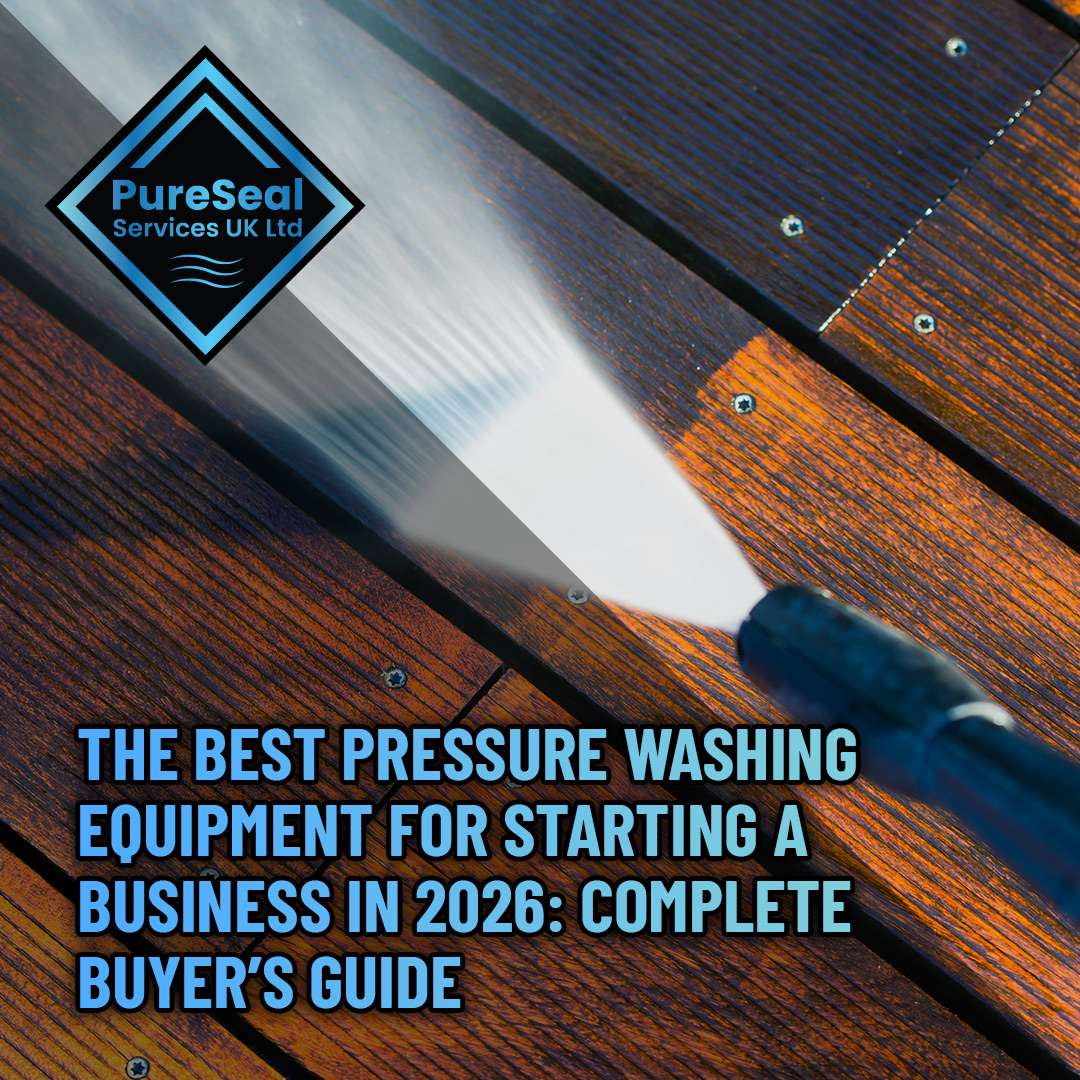
The Best Pressure Washing Equipment for Starting a Business in 2026: Complete Buyer’s Guide
Starting a pressure washing business in 2026 presents a significant opportunity for entrepreneurs looking to enter the exterior cleaning industry. Demand for professional driveway cleaning, patio restoration, roof cleaning, render cleaning, and commercial exterior maintenance continues to grow throughout the UK, creating opportunities for well-equipped and professionally operated businesses.
One of the biggest decisions any new exterior cleaning contractor will make is selecting the right equipment. Investing in reliable, commercial-grade machinery from the outset can dramatically improve efficiency, cleaning results, profitability, and customer satisfaction.
Many new businesses make the mistake of purchasing low-cost domestic pressure washers that are simply not designed for daily commercial use. Professional exterior cleaning requires equipment capable of handling demanding workloads while delivering consistent performance.
Companies such as Pure Seal Services demonstrate the importance of using professional equipment and industry-leading techniques to achieve high-quality results across a wide range of exterior cleaning projects.
Why Equipment Selection Matters
The quality of your equipment affects almost every aspect of your business.
Professional machinery provides:
- Faster cleaning times
- Improved cleaning results
- Better reliability
- Reduced downtime
- Increased customer confidence
- Higher profitability
- Greater service capabilities
Poor-quality equipment often leads to breakdowns, delays, customer complaints, and unnecessary replacement costs.
A pressure washing business should be viewed as a long-term investment, and equipment purchases should reflect this mindset.
The Core Equipment Every Startup Needs
Before accepting your first customer, you’ll need more than just a pressure washer.
Essential Startup Equipment Checklist
| Equipment | Purpose | Typical Cost |
|---|---|---|
| Professional Pressure Washer | Primary cleaning system | £2,500 – £8,000+ |
| Surface Cleaner | Driveway and patio cleaning | £400 – £2,000+ |
| Hose Reels | Efficient operation | £200 – £800 |
| Water Tank | Mobile water supply | £500 – £2,500 |
| Van Setup | Transport and storage | £10,000 – £50,000+ |
| PPE Equipment | Health and safety | £200 – £800 |
| Turbo Nozzles | Heavy-duty cleaning | £50 – £250 |
| Flat Surface Nozzles | General cleaning | £20 – £100 |
Professional setups generally require a considerably larger investment than many beginners expect.
Understanding Pressure Washer Specifications
Many new operators focus solely on pressure figures when comparing machines. In reality, water flow is often equally important.
Key Terms Explained
| Specification | Meaning |
|---|---|
| PSI | Pounds per square inch of pressure |
| Bar | European pressure measurement |
| Litres Per Minute | Water flow rate |
| Engine Size | Power output |
| Pump Type | Determines reliability and lifespan |
Higher pressure does not automatically mean better cleaning.
For example, a machine producing 15 litres per minute may clean large surface areas significantly faster than a higher-pressure machine with a lower flow rate.
Petrol vs Electric Pressure Washers
One of the first decisions you’ll need to make is whether to purchase a petrol-powered or electric-powered machine.
Petrol Pressure Washers
Advantages:
- Greater mobility
- Higher performance
- Suitable for commercial work
- No electrical supply required
Disadvantages:
- Higher purchase cost
- More maintenance
- Increased fuel expenses
Electric Pressure Washers
Advantages:
- Lower operating costs
- Quieter operation
- Reduced maintenance
Disadvantages:
- Limited mobility
- Lower power output
- Dependence on electrical supply
Comparison Table
| Feature | Petrol | Electric |
|---|---|---|
| Mobility | Excellent | Limited |
| Power | Excellent | Moderate |
| Maintenance | Higher | Lower |
| Running Costs | Higher | Lower |
| Commercial Suitability | Excellent | Moderate |
For serious business use, petrol-powered systems remain the preferred choice for most exterior cleaning contractors.
Choosing the Right Water Flow Rate
Water flow directly impacts productivity.
Typical Flow Rates
| Flow Rate | Suitable For |
|---|---|
| 8-10 LPM | Light domestic use |
| 11-13 LPM | Small business startup |
| 14-18 LPM | Professional exterior cleaning |
| 20+ LPM | Large commercial operations |
Many experienced contractors consider 15 litres per minute or more ideal for professional driveway and patio cleaning.
Higher flow rates generally allow operators to complete jobs faster, increasing daily earning potential.
Surface Cleaners: A Must-Have Investment
A surface cleaner is one of the most valuable pieces of equipment for any pressure washing business.
Instead of using a lance alone, surface cleaners utilise rotating spray bars to deliver even cleaning results across large areas.
Benefits of Surface Cleaners
- Faster cleaning
- Reduced operator fatigue
- Improved consistency
- Less overspray
- Professional finish
Typical Surface Cleaner Sizes
| Size | Suitable Application |
|---|---|
| 12-16 Inch | Small domestic work |
| 18-20 Inch | General residential cleaning |
| 24-30 Inch | Larger commercial projects |
| 30+ Inch | Industrial operations |
Investing in a quality surface cleaner can dramatically improve productivity and profitability.
Hot Water vs Cold Water Systems
Many startups begin with cold water systems before upgrading to hot water capabilities.
Cold Water Systems
Ideal for:
- Driveways
- Patios
- Pathways
- General pressure washing
Hot Water Systems
Ideal for:
- Oil stain removal
- Commercial cleaning
- Industrial sites
- Heavy contamination
Comparison
| Feature | Cold Water | Hot Water |
|---|---|---|
| Purchase Cost | Lower | Higher |
| Running Costs | Lower | Higher |
| Oil Removal | Moderate | Excellent |
| General Cleaning | Excellent | Excellent |
| Maintenance | Lower | Higher |
Hot water systems can command premium pricing for specialist cleaning projects.
Water Tanks and Buffer Systems
Many operators underestimate the importance of water management.
Certain customer properties may not provide sufficient water pressure to supply your equipment directly.
A buffer tank helps ensure consistent performance.
Common Tank Sizes
| Tank Size | Suitable For |
|---|---|
| 350 Litres | Small domestic jobs |
| 500 Litres | General startup use |
| 650 Litres | High-volume cleaning |
| 1,000 Litres+ | Commercial operations |
Professional van setups often incorporate permanently installed tanks, hose reels, pumps, and storage systems.
Hose Reels and Hoses
Quality hoses improve efficiency and reduce frustration on-site.
Features to consider include:
- Abrasion resistance
- Flexibility
- Pressure rating
- Reel quality
- Hose length
Typical Hose Lengths
| Length | Application |
|---|---|
| 30 Metres | Small domestic work |
| 50 Metres | General residential cleaning |
| 100 Metres | Larger properties |
| 150 Metres+ | Commercial contracts |
Longer hose runs can reduce the need to constantly reposition equipment.
Van Setup Considerations
Your van is effectively your mobile workspace.
A well-designed setup improves efficiency and creates a professional impression.
Typical Van Setup Components
| Component | Estimated Cost |
|---|---|
| Water Tank | £500 – £2,500 |
| Hose Reels | £500 – £2,000 |
| Shelving | £300 – £1,500 |
| Pressure Washer Mounting | £200 – £1,000 |
| Signwriting | £500 – £2,500 |
| Lighting | £100 – £800 |
A professionally organised van can significantly reduce setup and pack-down times.
Safety Equipment Requirements
Safety should never be overlooked.
Professional operators should invest in:
- Safety boots
- Eye protection
- Ear defenders
- Waterproof clothing
- Gloves
- High-visibility clothing
- Respiratory protection where required
PPE Budget Guide
| Item | Typical Cost |
|---|---|
| Safety Boots | £80 – £250 |
| Waterproof Clothing | £100 – £400 |
| Eye Protection | £10 – £100 |
| Ear Protection | £20 – £100 |
| Gloves | £10 – £50 |
Quality PPE improves safety, comfort, and professionalism.
Additional Equipment for Business Growth
As your business develops, you may wish to expand your service offering.
Expansion Equipment
| Equipment | Service Expansion |
|---|---|
| Gutter Vacuum | Gutter cleaning |
| Soft Wash System | Render cleaning |
| Roof Scraping Tools | Roof cleaning |
| Steam Cleaning Equipment | Delicate surfaces |
| Water-Fed Pole System | Exterior building cleaning |
| Chemical Application System | Soft washing services |
Diversification allows businesses to increase average job values and reduce reliance on a single service.
Budgeting for Professional Equipment
While startup costs vary significantly, investing in professional-grade equipment from the beginning often delivers the best long-term value.
Example Professional Startup Budget
| Item | Estimated Cost |
|---|---|
| Commercial Pressure Washer | £4,000 – £8,000 |
| Surface Cleaner | £800 – £2,000 |
| Water Tank Setup | £1,000 – £3,500 |
| Hose Reels and Hoses | £500 – £2,000 |
| Van Purchase | £15,000 – £40,000+ |
| PPE and Safety Equipment | £300 – £1,000 |
| Branding and Signwriting | £1,000 – £3,000 |
| Insurance | £500 – £2,000 |
A serious exterior cleaning business should focus on quality, reliability, and long-term profitability rather than choosing equipment based purely on the lowest purchase price.
Customers seeking premium services expect professional machinery, professional results, and professional standards. Businesses that invest appropriately in their equipment are often better positioned to secure higher-value projects, build stronger reputations, and establish themselves as trusted providers within the increasingly competitive UK exterior cleaning market.
Maintaining Your Equipment for Maximum Lifespan
Purchasing professional equipment is only part of the equation. Regular maintenance plays a critical role in protecting your investment and ensuring consistent performance throughout the year.
Commercial pressure washing systems are subjected to demanding conditions including dirt, debris, fluctuating temperatures, and prolonged operating hours. Without routine maintenance, even high-quality machinery can experience premature wear and costly breakdowns.
Key maintenance tasks include:
- Checking oil levels
- Inspecting hoses for damage
- Cleaning inlet filters
- Lubricating moving parts
- Flushing pumps after use
- Replacing worn nozzles
- Monitoring water tank cleanliness
Typical Annual Maintenance Costs
| Equipment | Estimated Annual Cost |
|---|---|
| Pressure Washer Servicing | £200 – £800 |
| Pump Repairs | £100 – £1,500 |
| Hose Replacement | £100 – £500 |
| Nozzle Replacement | £50 – £250 |
| Engine Maintenance | £150 – £600 |
Businesses that prioritise maintenance often experience less downtime, fewer emergency repairs, and improved customer satisfaction due to greater reliability.
Understanding Pressure Washer Pumps
The pump is arguably the most important component of any pressure washing machine. While many new business owners focus on engine size or pressure ratings, the quality of the pump often determines how reliable the machine will be over the long term.
Commercial-grade pumps are designed to operate for extended periods and withstand daily use, making them far better suited to professional cleaning work than domestic alternatives.
Common Pump Types
| Pump Type | Typical Use | Durability |
|---|---|---|
| Axial Pump | Domestic machines | Low to Moderate |
| Triplex Pump | Commercial equipment | High |
| Belt Drive Pump | Heavy-duty commercial use | Very High |
| Gear Drive Pump | Professional applications | High |
For anyone planning to clean driveways, patios, render, commercial premises, or large residential properties regularly, a triplex or belt-driven pump is generally the preferred option due to its longevity and serviceability.
Although commercial pumps increase initial investment costs, they often reduce lifetime ownership costs through improved durability and reduced repair requirements.
Choosing the Right Nozzles for Different Surfaces
Pressure washing is not simply about applying maximum pressure. Different surfaces require different cleaning approaches to avoid damage and achieve the best possible finish.
Selecting the correct nozzle can significantly improve both cleaning speed and cleaning quality.
Common Pressure Washing Nozzles
| Nozzle Type | Application |
|---|---|
| 0° Red Nozzle | Very concentrated cleaning |
| 15° Yellow Nozzle | Heavy-duty cleaning |
| 25° Green Nozzle | General surface cleaning |
| 40° White Nozzle | Delicate surfaces |
| Soap Nozzle | Chemical application |
| Turbo Nozzle | Deep cleaning and moss removal |
Using the wrong nozzle can result in unnecessary surface damage, particularly on natural stone, block paving, render, timber decking, and decorative concrete.
Professional operators understand that effective cleaning often involves balancing pressure, water flow, nozzle selection, and cleaning technique.
Chemical Application Equipment
Many exterior cleaning services involve more than pressure washing alone.
Modern exterior cleaning businesses frequently use specialist cleaning solutions to tackle organic growth, algae, black spot, lichen, mould, and atmospheric staining.
To apply chemicals safely and effectively, dedicated equipment may be required.
Common Chemical Application Systems
| System | Typical Use |
|---|---|
| Pump Sprayers | Small treatment areas |
| Battery Sprayers | Residential applications |
| Soft Wash Systems | Render and roof cleaning |
| Proportioning Systems | Controlled chemical mixing |
| Downstream Injectors | Pressure washer chemical application |
Investing in quality chemical application equipment allows businesses to expand into profitable services such as render cleaning, roof treatments, and biocide applications.
These services often command higher margins because they require specialist knowledge and equipment.
Water Supply Challenges on Commercial Sites
One issue that many new business owners encounter is inadequate water supply at customer locations.
Large commercial cleaning projects can consume substantial volumes of water, particularly when cleaning extensive paved areas, warehouses, car parks, schools, or retail parks.
Planning for water availability should form part of every site survey.
Water Supply Considerations
| Factor | Importance |
|---|---|
| Available Tap Access | Essential |
| Water Pressure | High |
| Distance to Water Source | High |
| Water Consumption | High |
| Site Restrictions | Medium |
| Tank Capacity | High |
Some contractors invest in larger water storage systems to ensure uninterrupted operation during demanding commercial projects.
The ability to work independently of the customer’s water supply can provide greater flexibility and improve operational efficiency.
Investing in Professional Storage Solutions
Organisation becomes increasingly important as a business grows.
A cluttered van wastes time, increases safety risks, and can create a poor impression when arriving at customer properties.
Professional storage systems help keep equipment secure, organised, and easily accessible.
Benefits of Van Organisation
- Faster job setup
- Reduced equipment damage
- Improved productivity
- Better stock management
- Enhanced professional image
- Safer working environment
Common Storage Components
| Component | Purpose |
|---|---|
| Shelving Units | Equipment storage |
| Lockable Cabinets | Chemical storage |
| Hose Holders | Organisation |
| Tool Drawers | Small equipment storage |
| Tank Mounts | Water system security |
Well-designed storage systems can save significant time over the course of a working week.
Preparing for Business Growth
Many startup operators purchase equipment solely for their current workload. While understandable, this approach can become costly when demand increases.
Planning for future expansion often provides better value over the long term.
Questions worth considering include:
- Will the equipment support commercial work?
- Can additional hose reels be added?
- Is the water tank large enough for future growth?
- Will the van accommodate additional equipment?
- Can the machine operate multiple cleaning tools?
Purchasing equipment with scalability in mind can help avoid costly upgrades within the first few years of trading.
Growth Planning Checklist
| Question | Consideration |
|---|---|
| Future Staff? | Additional equipment needed |
| Commercial Contracts? | Increased capacity required |
| Expanded Services? | Specialist equipment required |
| Larger Properties? | Greater water flow beneficial |
| More Vehicles? | Standardisation important |
Businesses that plan ahead often experience smoother growth and avoid operational bottlenecks.
Return on Investment: Thinking Beyond Purchase Price
One of the biggest mistakes new pressure washing businesses make is focusing exclusively on upfront costs.
The cheapest machine is rarely the most profitable machine.
A professional pressure washing setup should be viewed as an income-generating asset.
For example, if a more expensive commercial machine allows an operator to complete jobs 30% faster, that additional productivity can generate significantly more revenue over the course of a year.
Comparing Equipment Value
| Factor | Budget Equipment | Professional Equipment |
|---|---|---|
| Purchase Cost | Lower | Higher |
| Productivity | Lower | Higher |
| Reliability | Lower | Higher |
| Downtime | More Frequent | Less Frequent |
| Lifespan | Shorter | Longer |
| Professional Image | Moderate | Excellent |
Customers investing in premium exterior cleaning services often expect professional equipment to be used on their property. Businesses positioning themselves at the higher end of the market can justify stronger pricing by delivering superior workmanship, reliability, and customer experience.
For companies aiming to build a trusted reputation similar to the standards demonstrated by Pure Seal Services, equipment should be selected not only for immediate affordability but also for its ability to support long-term growth, operational efficiency, and consistently high-quality cleaning results across residential and commercial projects alike.